The headlines are loud. The markets are nervous. And too many Americans are sitting still, hoping the turbulence passes on its own.
It won’t.
Every economic disruption in modern American history has followed the same brutal pattern: those who prepared, survived. Those who didn’t, got swept away — not by bad luck, but by bad positioning. The difference between weathering a storm and being destroyed by one has never been about how much money you start with. It’s about what you know, what you own, and what you do before the rain starts falling.
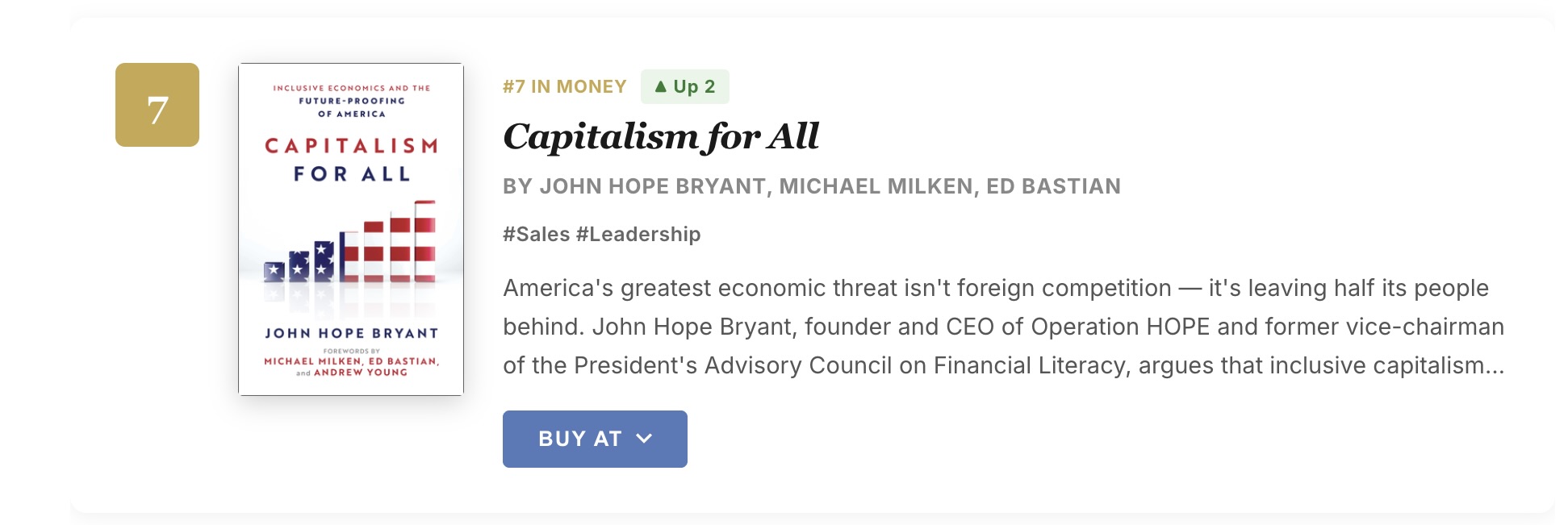
These are 10 rules drawn from the principles at the heart of my now bestselling book Capitalism for All — rules that apply whether you earn $30,000 or $300,000, whether you live in Appalachia or Atlanta, whether you vote red or blue. The economy doesn’t care about your politics. It cares about your preparation.
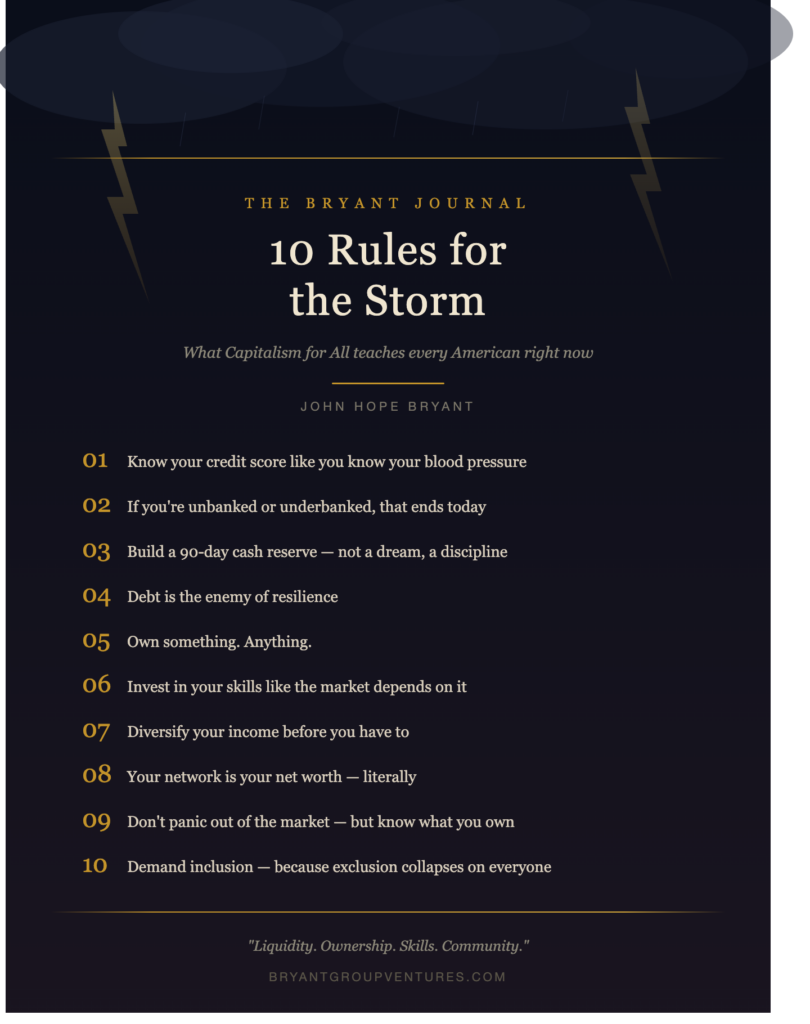
1. Know Your Credit Score Like You Know Your Blood Pressure
Your credit score is your economic vital sign. In a downturn, it determines whether you get the loan, the apartment, the business line of credit — or not. A score below 700 in a tightening economy is a pre-existing condition. Check it. Fix it. Protect it. Free at annualcreditreport.com — no excuses.
2. If You’re Unbanked or Underbanked, That Ends Today
Cash under the mattress doesn’t earn interest, can’t be traced for legal protection, and disappears in a fire. A bank account is not a luxury — it is the on-ramp to every other financial tool. FDIC-insured. Start there.
3. Build a 90-Day Cash Reserve — Not a Dream, a Discipline
Three months of basic living expenses in liquid savings before anything else. Not investing. Not crypto. Cash. In 2008, the people who survived weren’t always the richest — they were the most liquid.
4. Debt Is the Enemy of Resilience
High-interest consumer debt — especially credit cards above 20% — is a wealth destruction machine in good times. In a downturn, it becomes a trap with no exit. Attack the highest-rate debt first. Aggressively. Now, before the storm, not during it.
5. Own Something. Anything.
Renters get displaced in downturns. Employees get laid off. But owners — of a home, a small business, a meaningful equity stake — have something to negotiate with. Ownership is the difference between weathering a storm and being swept away by it.
The thesis in one word: own.
6. Invest in Your Skills Like the Market Depends on It — Because It Does
In an AI-accelerated economy facing potential contraction, the most recession-resistant asset you have is your own human capital. Certifications, trades, financial literacy courses, second languages — these don’t crash with the Dow. The 1929 lesson: credentialed, skilled workers recovered. The untrained did not.
7. Diversify Your Income Before You Have To
A single employer in an uncertain economy is a single point of failure. A side income — a skill monetized, a small business started, a rental room — is not just extra money. It is a circuit breaker. Start small. Start now.
8. Your Network Is Your Net Worth — Literally
In every economic contraction in American history, jobs, contracts, and capital moved through relationships first. Who you know determines what you hear first — and what you hear first determines whether you act in time. Invest in your community as deliberately as you invest in your 401(k).
9. Don’t Panic Out of the Market — But Know What You Own
The greatest wealth destruction event of 2008–09 was not the crash itself. It was ordinary Americans selling at the bottom out of fear and missing the recovery. If you have long-term investments, understand them. Have a plan before the volatility hits, so emotion doesn’t make your financial decisions for you.
10. Demand Inclusion — Because an Economy That Excludes You Will Eventually Collapse on You
This is the deepest warning: an economy that leaves 30, 40, 50 percent of its people on the outside is not a stable economy — it is a bubble waiting to burst. Demand financial education in your schools. Support small business ecosystems in your community. Vote and advocate for policies that widen the ownership ladder. This isn’t altruism. It is self-preservation. A broad economy protects everyone. A narrow one eventually swallows itself.
The Bottom Line
The storm may come. But you are not helpless.
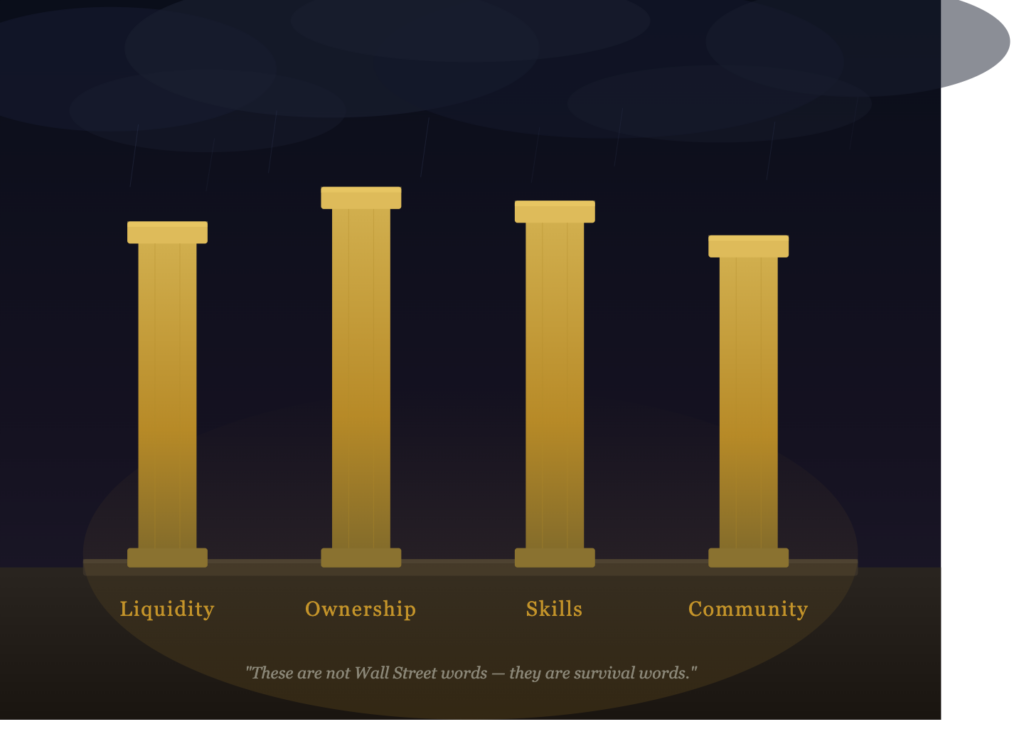
Liquidity. Ownership. Skills. Community.
These are not Wall Street words — they are survival words. And they are available to every American willing to act before the rain starts.
#CapitalismForAll | #ThirdReconstruction | operationhope.org
Capitalism For All: Inclusive Economics and the Future-Proofing of America — Available now at all major booksellers.
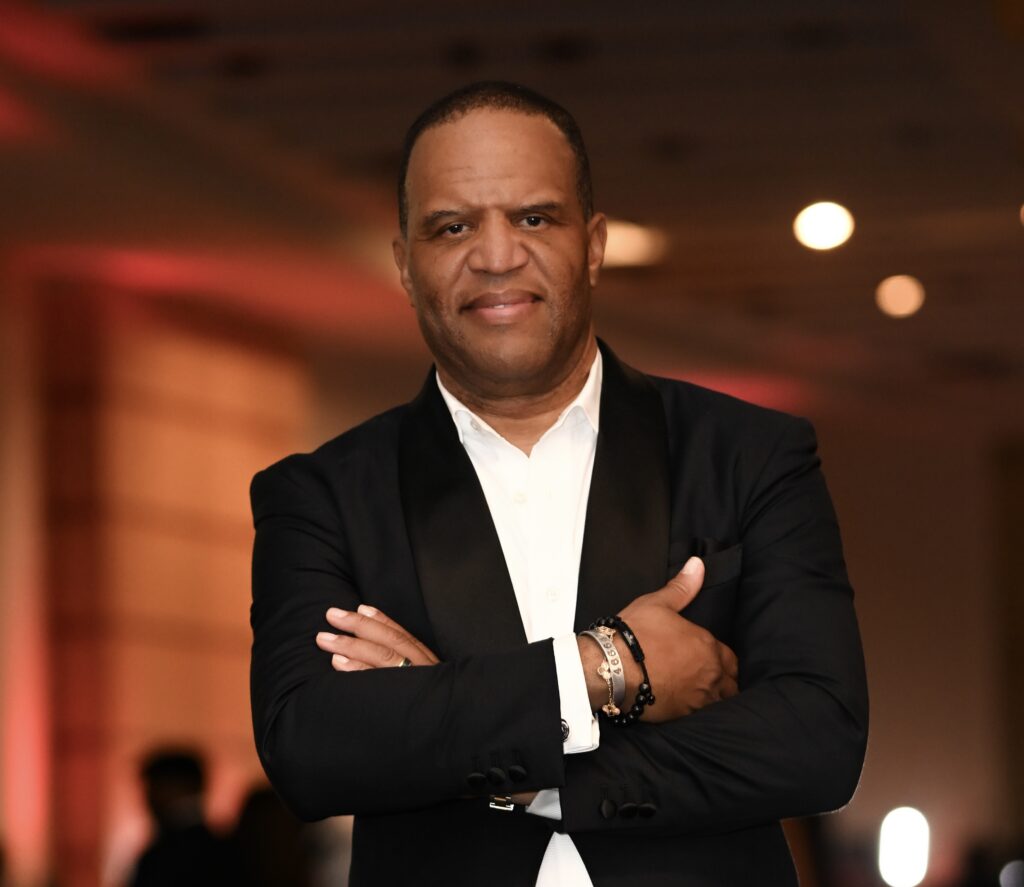
John Hope Bryant — founder of Bryant Group Ventures, Operation HOPE, Inc, publisher of the Bryant Journal and author of his 7th book Capitalism for All: Inclusive Economics and the Future Proofing of America, now a bestseller.