This article was originally published by PACE NEWS on September 11, 2026, and is reposted here with gratitude. Written by Dr. Gloria Zuurveen, Editor-in-Chief.
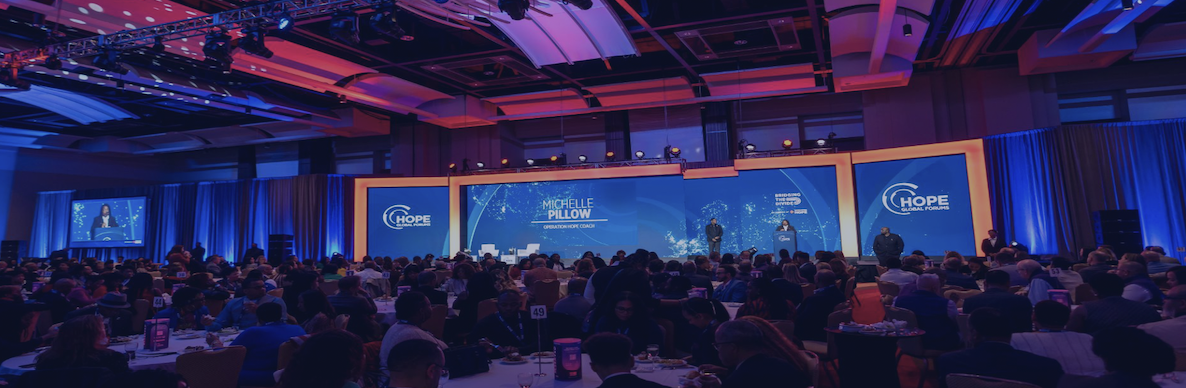
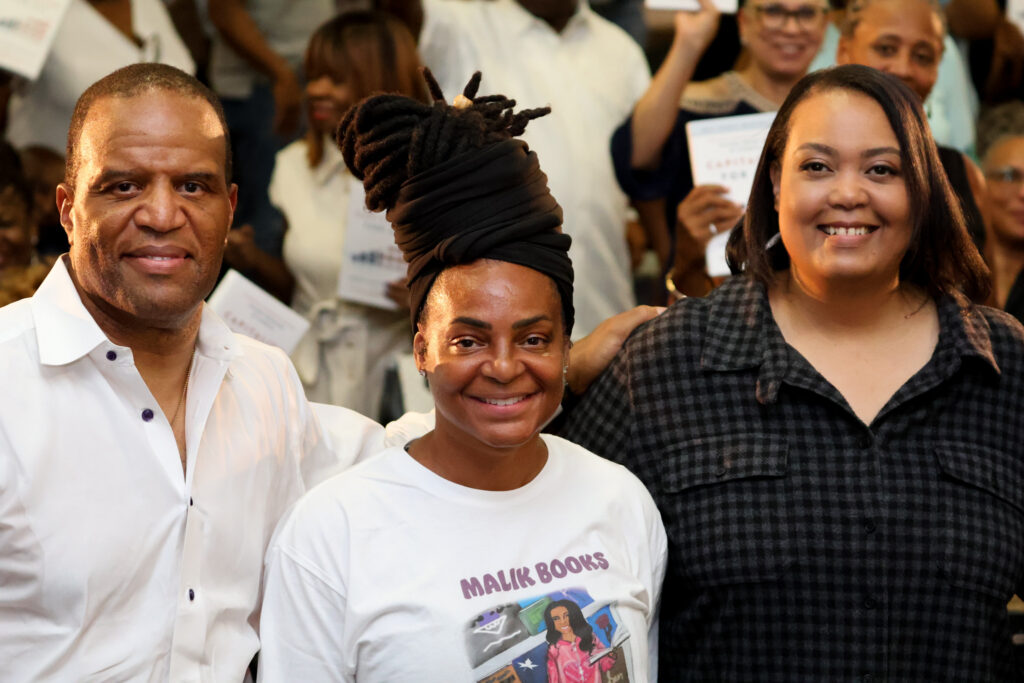
On September 9, a packed house at The Bridge in Baldwin Hills Crenshaw Plaza came out for a Capitalism for All conversation and book signing with John Hope Bryant, Founder, Chairman, and CEO of Operation HOPE. Malik Books and the Pan African Film Festival presented the evening, and bestselling author and investor Arlan Hamilton moderated. Dr. Gloria Zuurveen of PACE NEWS was there to cover it. She has followed John’s work since his early days on La Brea Avenue after the 1992 unrest.
From Compton To The Crown of Financial Success
John Hope Bryant Brings the Gospel of Financial Freedom Home to a Packed Baldwin Hills Audience
By Dr. Gloria Zuurveen, Editor-in-Chief, PACE NEWS
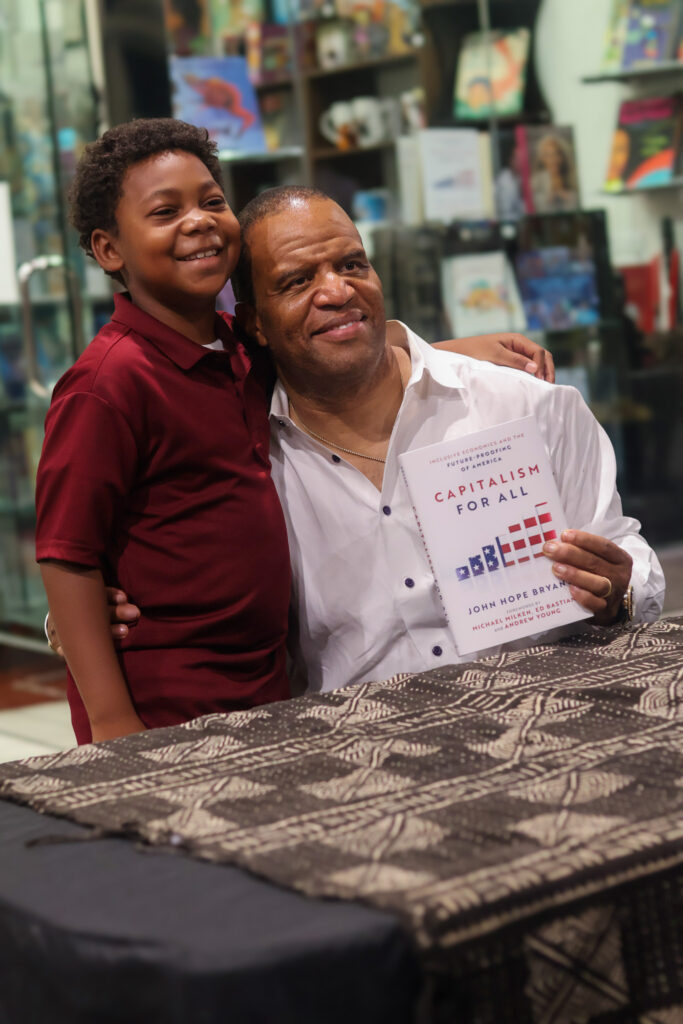
LOS ANGELES—There is no better time than now for families to discover the power of financial literacy. On Wednesday evening, that discovery brought a packed house to The Bridge on the second floor of Baldwin Hills Crenshaw Plaza. Lines stretched through the venue as people waited patiently to hear from the one and only John Hope Bryant and receive a copy of his new book, Capitalism for All: Inclusive Economics and the Future-Proofing of America.
The wait was well worth it. Yes, it was.
Presented by Malik Books and the Pan African Film Festival, the evening brought Bryant together with entrepreneur, investor and bestselling author Arlan Hamilton, who moderated the conversation. Following an introduction by Malik Books owner Malik Muhammad, Bryant and Hamilton walked onto the stage and took their respective seats. From that moment, one could feel the urgency of the business at hand. This was more than a book signing. This was a community classroom filled with people searching for knowledge about money, credit, entrepreneurship and ownership. Many in the room were seeking to learn how they, too, could turn adversity into opportunity and build something lasting for their families.
A Phoenix Rising from the Ashes
Bryant’s story is the story of a boy from Compton who rose like a phoenix from the ashes and is now flying as high as one should after enduring the circumstances he described inside that room. Yet Bryant did not begin his testimony by pretending that his journey was easy. He spoke about the negative conditions surrounding his childhood and how those experiences motivated him to choose a different direction. At an impressionable age, he watched his first mentors—his mother and father—experience heartache, conflict and financial loss. According to Bryant, his parents controlled businesses and assets that would be worth millions of dollars by today’s standards. Those assets included an eight-unit apartment building, a gas station and other ventures. But the ventures ended in failure. The family possessed assets, yet it lacked a sufficient understanding of how money operated and how wealth must be managed, protected and preserved by working together as a team.
That was one of the evening’s greatest lessons: it is possible to make money and still lose everything when financial literacy is missing. Bryant recalled witnessing his parents arguing and struggling as their financial circumstances deteriorated. Their experience taught him early that money is not merely about dollars. Money affects families, relationships, housing, safety and the futures of children. When his parents divorced, his mother did what a mother should do—she sought shelter and security for her children.
But that chapter of Bryant’s childhood brought another devastating experience. He described living with friends of his mother and looking up to a man whom he credits with helping save his life. Bryant then witnessed that man die violently before his eyes after becoming caught up in unscrupulous street dealings. As Bryant recounted that tragic moment, the audience sat fixed on every word. “I can see it right now,” Bryant said. The experience left an indelible mark upon him. It motivated him first to stay alive and then to find another way forward. He had already seen what the streets could do. One of his young friends, around nine years old, was killed while hustling in the neighborhood. Bryant understood that if he remained on that path, death or imprisonment could be waiting for him.
Then came the banker and an entrepreneur who helped change the trajectory of his life.
After the banker visited Bryant’s classroom, a young Bryant raised his hand and asked what he did for a living. The man replied that he was a banker and an entrepreneur—a word Bryant admitted he did not yet understand—but once he learned that entrepreneurship offered a legal path to business ownership and financial success, Bryant determined that he, too, would become an entrepreneur. He wanted to look the part and asked his mother to buy him a new suit. She objected and told him to wear what he already owned—the three-piece crushed-velvet or more velour church suit hanging in his closet.
He wore it.
And the rest is history.
Bringing Hope After Los Angeles Burned
Bryant is rooted and grounded in Los Angeles. He understands the poverty, economic exclusion and hopelessness that helped create the conditions surrounding the 1992 civil unrest. When the streets burned and parts of Los Angeles were left in ruins, Bryant did not simply stand on the outside and describe the devastation. He entered the struggle with a plan to help people locked outside the financial system. I remember John Hope Bryant from his early days on La Brea Avenue and from the community-development bus tours into Watts with “Sweet” Alice Harris.
PACE NEWS was there during those years, documenting the people, the pain and the determination to rebuild. Bryant emerged from the ashes of the unrest carrying hope to people who had been overlooked, underserved and often exploited. Through Operation HOPE, he developed a movement aimed at helping the unbanked become bankable and transforming financial literacy into what he has described as a modern civil-rights issue. For more than 30 years, his work has focused on people too often considered the least among us. But Bryant’s message is clear: people are not poor because they lack intelligence, creativity or ambition. Too many are poor because they have never been properly taught the rules governing money, credit, investment and ownership. That is the system of capitalism Bryant wants to open to everyone.
You Can Identify a Community by Its Credit Scores
Bryant delivered one of his most practical lessons when he discussed the power of the credit score. He explained that one can learn much about the economic condition of a community by examining the credit scores of the people who live there. In communities where scores remain around 500, the business landscape commonly includes rent-to-own establishments, car-title lenders, pawnshops, check-cashing businesses and liquor stores. These businesses often profit from people who lack access to affordable credit and traditional financial services.
A low credit score makes nearly everything more expensive. It can increase the cost of borrowing, interfere with purchasing a home, restrict access to business capital and keep families trapped in high-interest debt. A stronger credit score, however, can open doors. This is why financial literacy is more than balancing a checkbook. It means understanding how to protect credit, manage debt, save for emergencies, finance a business, purchase property and pass assets to the next generation. Capitalism is already operating in our neighborhoods. The question is whether residents will remain only its customers or become its owners, investors and decision-makers.
Bringing the Message Home to Senatobia
The connection between Bryant’s national message and PACE’s work in Senatobia is already taking shape. Bryan Jordan, chairman, president and CEO of First Horizon Corporation—and a member of Operation HOPE’s board—endorsed Bryant’s message in Capitalism for All: “Capitalism for All lays out a basis and a plan for weaving a stronger socioeconomic fabric. In today’s economy, the need for increased financial inclusion has seldom been greater.”
That message was demonstrated locally during the August 8 PACE Community Forward Forum at New Ford Baptist Church under the leadership of Pastor Samuel Franklin. Kristi McCain’s presentation equipped residents with practical information about credit scores, banking and other critical financial-literacy issues. Emily Pasco, Vice President and Banking Center Manager, at First Horizon Bank in Senatobia, Mississippi also participated as PACE began developing relationships with financial professionals who can bring knowledge and opportunity directly into the community. Jordan’s words describe exactly what PACE is working to accomplish: weaving a stronger socioeconomic fabric by connecting families with financial education, responsible banking, business preparation and access to capital.
What Bryant expounds upon in Capitalism for All is not limited to individual success. It is about strengthening entire communities. Senatobia—particularly Historic New Town—needs this understanding from people who, like Bryant, have walked the walk and can offer more than talk. PACE’s developing relationships with Pasco, McCain, First Horizon and the principles advanced through Operation HOPE can help bring Bryant’s message home.
The goal is to prepare residents not merely to spend money, but to improve their credit, establish businesses, purchase property, create employment and participate in the wealth their labor produces. That is financial inclusion put into action—from Baldwin Hills to New Ford Baptist Church and into the families of Senatobia.
Integrating the Economy
Bryant’s message is supported by some powerful and provocative voices, including financier and philanthropist Michael Milken, Delta Air Lines CEO Ed Bastian and civil-rights icon Ambassador Andrew Young. Young establishes the moral and historical foundation of the book with these words:
“The Civil Rights Movement was never just about integrating lunch counters; it was about integrating the economy.”
Those words permeated the stage Wednesday night. The right to sit at a lunch counter means little if a person cannot afford the meal, obtain a loan to purchase the building or secure the capital necessary to open a competing business. Political freedom without economic participation leaves the work of the Civil Rights Movement unfinished. That is why Bryant’s message carries such urgency. He is challenging people not only to demand access but also to prepare themselves to use that access through education, discipline and financial understanding.
A Third Reconstruction—This Time With Capital
Black Americans are a resilient people. We have taken the little placed within our hands and helped make America what it is today. From our labor, faith and ingenuity have come industries, inventions, music, literature, language, fashion and culture that people across the world embrace. Nations flock to what Black Americans have produced, even though the people responsible for much of that greatness have too often been denied an equal share of the wealth it created. Our ancestors built while enslaved. They created during segregation. They established businesses, schools, churches, banks and communities while laws and institutions worked against their progress. When their property was stolen, their towns destroyed and their opportunities restricted, they rebuilt. That resilience is part of the history Bryant brings forward in Capitalism for All.
The First Reconstruction followed the Civil War and promised formerly enslaved people citizenship, political participation and a place in the nation they helped build. That promise was attacked and left unfinished. The Second Reconstruction emerged through the modern Civil Rights Movement. Black Americans fought to integrate public accommodations, schools, voting booths and government. But as Ambassador Andrew Young explains in the book, the movement was never merely about integrating lunch counters; it was also about integrating the economy.
Now we stand at the threshold of what may be called a Third Reconstruction—a reconstruction centered on capital, credit, technology, business creation and ownership. This is the reconstruction Bryant’s message addresses most directly. The wealth-producing possibilities before us are almost beyond measure. Artificial intelligence, financial technology, digital commerce and other emerging industries are reshaping how people work, communicate, invest and establish businesses. Entire companies can now be created with tools that previous generations could never have imagined. But the technology will not automatically produce equality. If Black Americans enter this new economy only as consumers, the wealth will once again pass through our hands and settle somewhere else. We must become the developers, owners, investors and decision-makers shaping these new systems. Bryant brings both the message and the method home. He has tested the waters, studied the financial system, applied its principles and now written down the results. His book does more than describe what is wrong with capitalism. It offers a path toward making capital work for people who have historically been excluded from it.
This time, we must understand the rules before the opportunity passes us by. Our people have already shown what we can produce with little. Imagine what Black America can build with knowledge, strong credit, modern technology, access to affordable capital and ownership of the enterprises our creativity makes possible. Capitalism for All declares that this reconstruction cannot belong only to the privileged few. This time around, capitalism must provide a doorway through which everyone prepared to learn, work, create and invest can enter. Bryant is emphasizing our history so that we will remember from whence we have come. But he is not asking us to remain in the past. He is using that history to point us toward the wealth-building opportunities directly before us. The First Reconstruction sought citizenship. The Second Reconstruction demanded civil rights. The Third Reconstruction must secure economic power. This time, we must not merely help build the table.
We must own a share of it.
“This Is My Calling”
During the conversation, Bryant was asked about the possibility of running for political office. He answered with humility and made it clear that the work he is already doing is his calling. His answer reminded me of Jesus Christ staying upon the path appointed for Him and preaching the gospel without hesitation. Bryant, too, has remained on a path—preaching the gospel of financial literacy and showing people how knowledge can help set them free from economic bondage.
Bryant is not presenting money as a god. He is teaching people how to understand and properly use the economic system in which they already live. Freedom is what this is about: freedom from the unnecessary stress and strain that come when families cannot meet the basic necessities of life; freedom from predatory lending; freedom from ignorance about credit; and freedom to use one’s God-given gifts to establish businesses and create opportunities for others. Bryant’s life has now placed him before kings, queens, presidents and global business leaders. Yet on Wednesday evening, he came home to Baldwin Hills and spoke directly to the community. From Compton to the crown of financial success, his foundation remains grounded in God, purpose and service.
The Message at the Top of a Mall
There was something prophetic about this conversation taking place at the top of Baldwin Hills Crenshaw Plaza—a historic community institution itself in dire need of the investment, ownership and economic renewal Bryant described.
The people filled the room because they understood the urgency. They came seeking a blueprint for building businesses, repairing credit, purchasing property and creating wealth that will remain in their families and communities. Our families already possess skills, ideas, relationships, history and enormous purchasing power. When those resources are organized with knowledge and discipline, they become capital. When families direct that capital toward productive ideas, they begin moving from dependency to ownership. For too long, dollars have entered the Black community and departed almost immediately. Bryant is calling upon us to understand how money operates so that we can invest in our own businesses, homes, institutions and children. Having only begun to examine Capitalism for All, I am already encouraged by what appears within its pages. After hearing Bryant’s testimony and knowing something of the struggle through which he came, it is clear that this book is more than a discussion of money.
It is a blueprint from a man who has lived the plan.
The Southern Truth is this: poverty does not have to become a permanent inheritance. A change of mind, supported by knowledge, faith, ownership and disciplined action, can change the financial direction of an entire family. John Hope Bryant is showing others the way—out of financial darkness and into the marvelous light of economic understanding. The packed house at Malik Books heard the message. Now, the question is whether we will put it into action.
Reposted from PACE NEWS. Text and photos © PACE NEWS / Dr. Gloria Zuurveen. Thank you to Gloria for the coverage and to Rod McGrew for sharing it.