Editor’s Note:
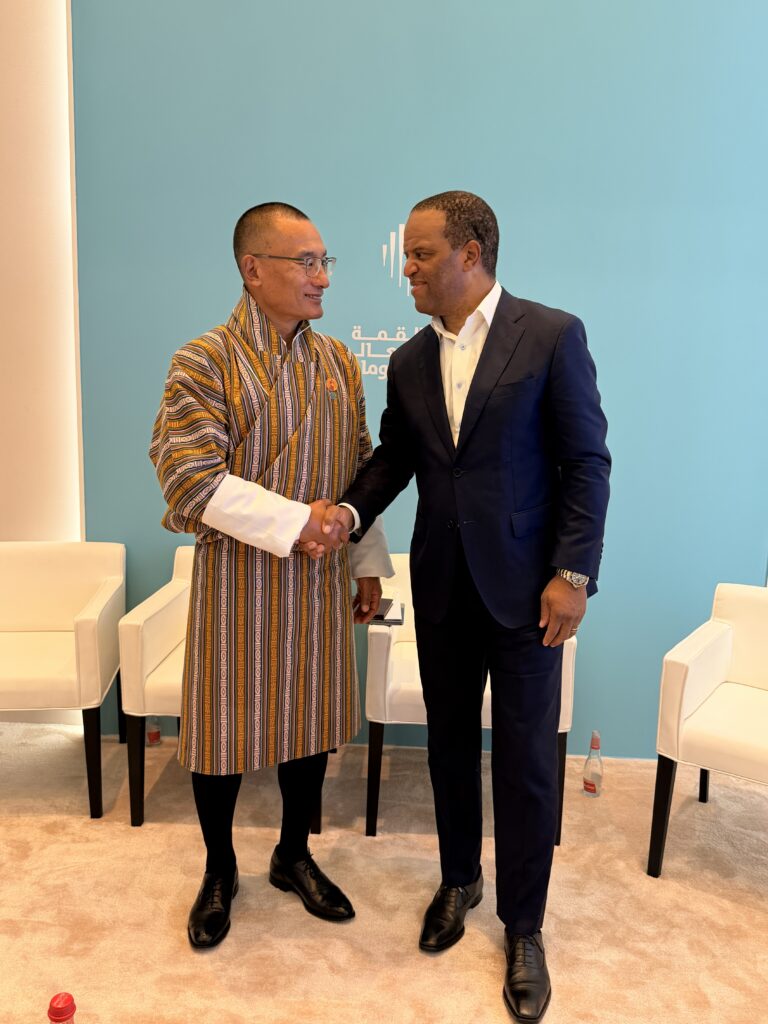
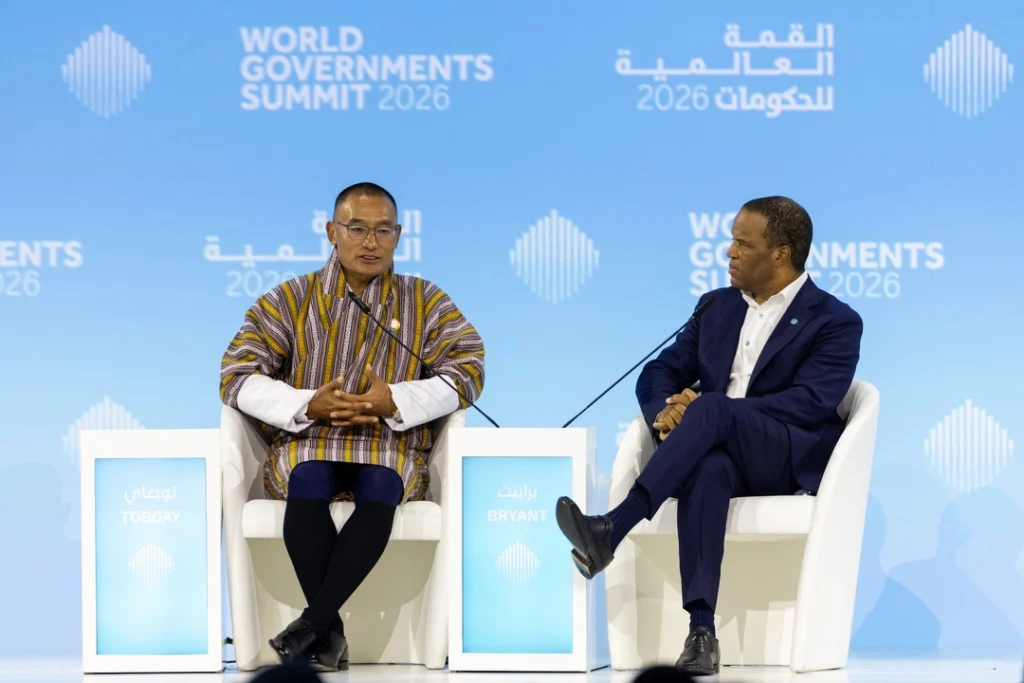
Some moments are difficult to frame in words and phrases — and my time getting to know the Prime Minister of Bhutan, His Excellency Tshering Tobgay, prior to our main stage session today at the World Government Summit 2026, in Dubai in the United Arab Emirates, qualifies. We also spent quality time together post. What a great man, and leader, and he and the King of Bhutan have outlined a framework they call GNH (Gross National Happiness), which I agree with. He has invited me to visit Bhutan, which I plan to soon accept.
What Should Governments Be Optimizing For?
Reflections from the World Governments Summit 2026
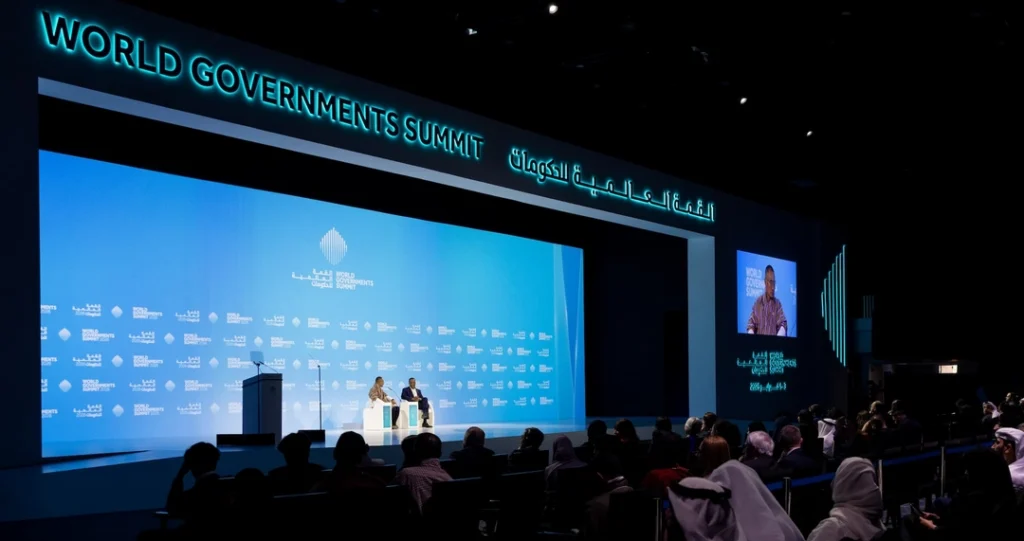
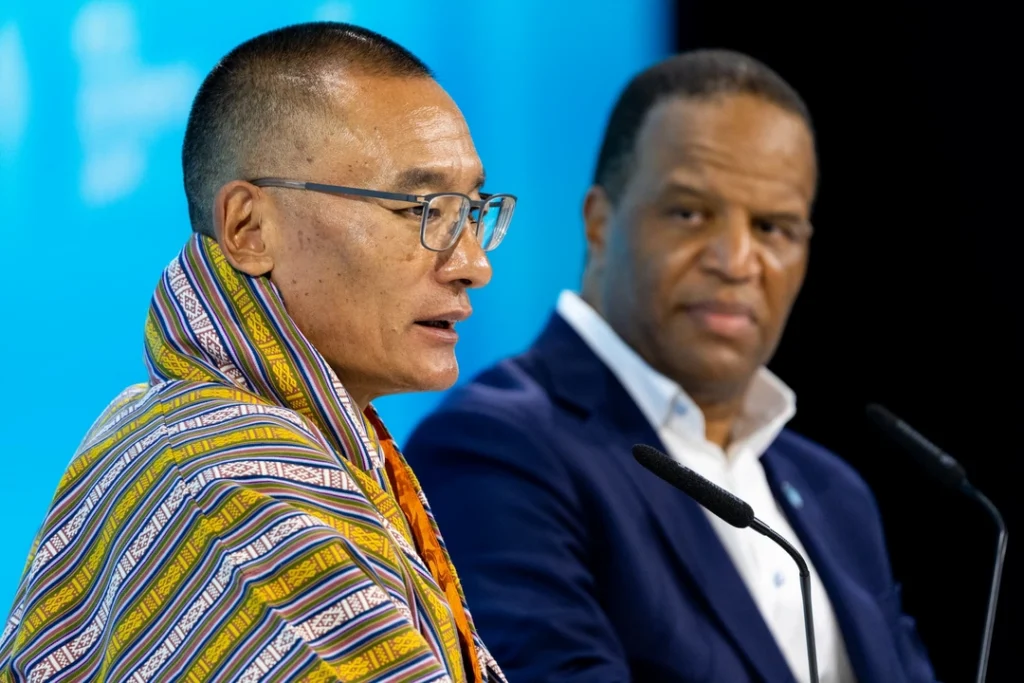
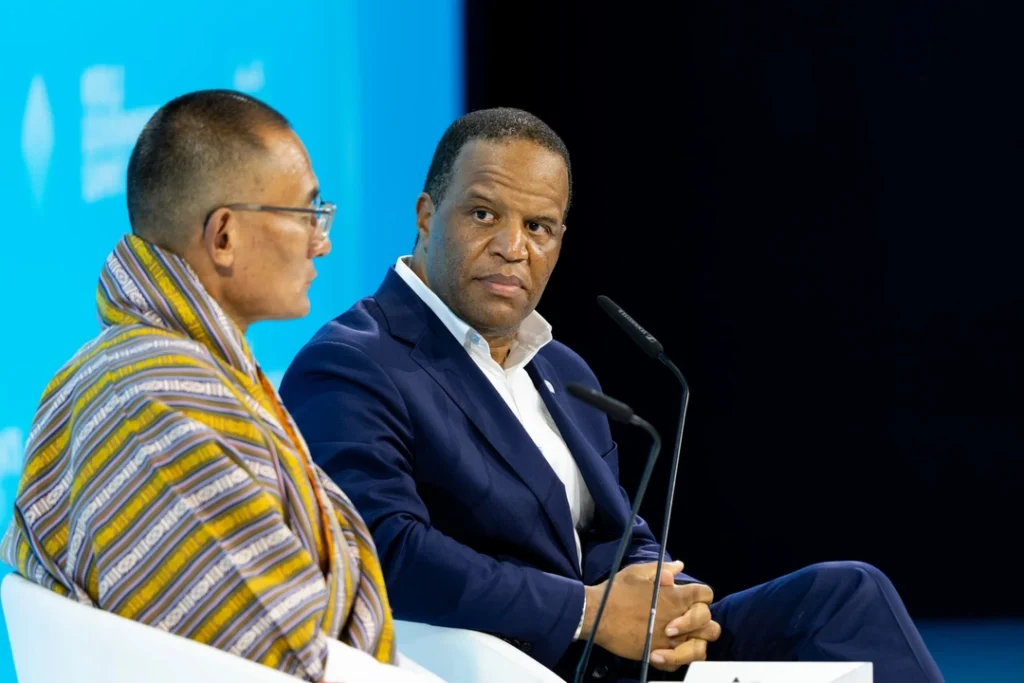
On day one of the World Governments Summit 2026, I had the privilege of moderating a main-stage conversation with His Excellency Tshering Tobgay, former Prime Minister of Bhutan, on a deceptively simple but profoundly consequential question: What should governments be optimizing for?
In an era defined by volatility—economic disruption, technological acceleration, climate stress, and widening inequality—the metrics governments choose to prioritize are no longer academic. They are destiny. The conversation with H.E. Tobgay offered a rare and timely synthesis: a bridge between Bhutan’s pioneering philosophy of Gross National Happiness (GNH) and a modern framework for what I call Good Capitalism—responsible growth, responsible governing, and people as the ultimate product of policy.
Beyond GDP: A More Human North Star
For decades, Gross Domestic Product has served as the dominant scoreboard of national success. GDP measures output, but it does not measure the outcomes that truly matter to human beings: wellness, trust, dignity, resilience, mobility, or opportunity. Bhutan, under the moral leadership of its King, recognized this limitation early and made a courageous decision—to optimize not just for economic growth, but for human flourishing.
GNH reframes the role of government. It asks whether growth is improving lives, strengthening communities, and preserving the natural and cultural inheritance of a nation. It insists that prosperity without purpose is not progress at all.
What struck me during our exchange was how relevant this philosophy has become for the rest of the world. As societies grapple with burnout, polarization, technological displacement, and a fraying social contract, Bhutan’s approach feels less like an outlier and more like a preview of where governance must go next.
Good Capitalism and Responsible Growth
The false choice between growth and goodness has dominated global debates for far too long. The truth is simpler—and more demanding: growth must be good to be sustainable.
Good Capitalism is not anti-market; it is pro-human. It recognizes that markets are among the most powerful tools ever created for lifting living standards—but only when aligned with long-term value creation rather than short-term extraction. Responsible growth means investing in people, institutions, and systems that expand opportunity rather than concentrate it.
In this context, governments are not merely regulators of markets; they are architects of ecosystems. Their role is to create the conditions where entrepreneurship thrives, innovation scales, and citizens can move up the economic ladder. When governments optimize for people—education, health, skills, trust, and dignity—the economy follows.
People as the Product
One of the core ideas we explored on stage was the notion that people are the product of good governance.
Every policy decision—taxation, education, infrastructure, housing, technology, workforce development—ultimately shapes human capability. A government that underinvests in its people is quietly shrinking its future GDP, no matter what the quarterly numbers say. Conversely, a government that prioritizes wellness, skills, and inclusion is compounding its national balance sheet in ways traditional accounting cannot capture.
This is where philosophy meets execution. Through my work with Operation HOPE, we have seen firsthand how financial literacy functions as economic infrastructure. When people understand money, credit, ownership, and opportunity, their confidence rises, their decision-making improves, and their economic participation deepens. Financial literacy is not charity—it is a growth engine.
As artificial intelligence reshapes every sector of the global economy, that work is expanding. The next frontier is AI literacy—ensuring that everyday citizens are not displaced by technology but empowered by it. Governments that invest early in both financial and AI literacy will unlock productivity, resilience, and inclusive growth at scale.
Inclusive Economics as a Growth Strategy
Inclusive economics is often framed solely as a moral imperative—and it is—but it is also a growth strategy hiding in plain sight. When large segments of a population are locked out of opportunity, nations operate far below their productive potential. Inclusion expands the talent pool, increases consumer demand, and stabilizes societies.
During the session, we discussed how countries like Bhutan have a unique opportunity over the next decade. By integrating happiness, wellness, sustainability, financial capability, and inclusive growth into a coherent national strategy, Bhutan can become a global model—not just for well-being, but for a new kind of competitive advantage.
The future will reward nations that can grow without breaking their people or their planet. Bhutan’s natural strengths—guided by enlightened leadership—position it to show the world that this balance is not only possible, but powerful.
Capitalism for All and a New Scorecard for the 21st Century
These themes are at the heart of my forthcoming book, Capitalism for All, which argues that capitalism itself must be widened—not weakened—if democracies are to thrive in the decades ahead. The goal is not to abandon growth, but to broaden participation in it.
GDP will always matter—but it cannot stand alone. We need complementary metrics that capture trust, mobility, resilience, happiness, and readiness for the future of work. We need leaders willing to ask not just how much an economy produces, but who benefits, at what cost, and for how long.
As the World Governments Summit demonstrated, the global appetite for this conversation is real. The challenge now is execution.
If the 20th century was about maximizing output, the 21st must be about maximizing outcomes. Governments that understand this—and act on it—will not only govern better; they will lead the world forward.
Bhutan has already shown us the direction. The rest of us would be wise to follow.