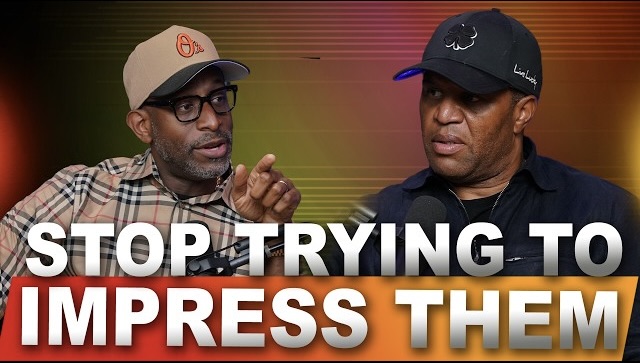
John Hope Bryant sits down with world-renowned neurosurgeon and journalist Sanjay Gupta for a powerful conversation about the connection between health, wealth, mindset, and longevity. The two explore how stress, financial wellness, environment, and hope can shape the quality — not just the length — of our lives.
From the impact of zip codes on health outcomes to the power of optimism, healing, and purpose, John and Dr. Gupta break down why a thriving life requires more than success — it requires balance, awareness, and a commitment to well-being.
Bryant Journal · Money & Wealth Podcast · Season 3
JOHN HOPE BRYANT & DR. SANJAY GUPTA:
When Health Is Wealth — A Conversation That Could Change Your Life
From the Editor
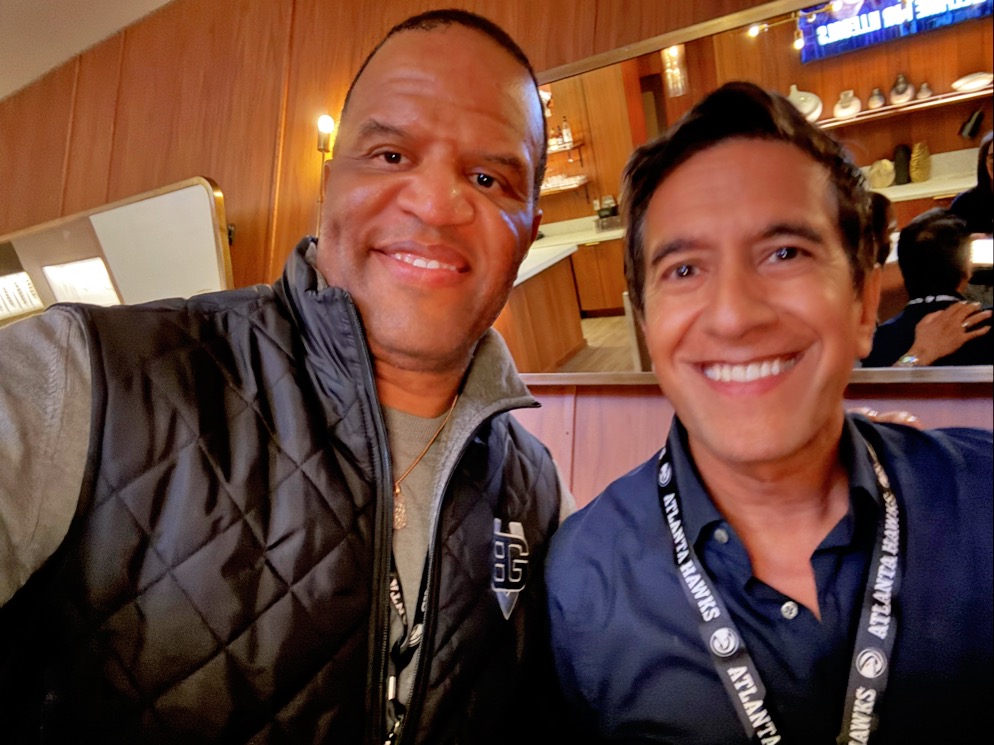
I sat down recently with my dear friend and brother-from-another-mother, Dr. Sanjay Gupta — world-renowned neurosurgeon, multiple Emmy Award-winning journalist, bestselling author, and the most trusted voice in medicine in America today — for what I can honestly say became one of the most powerful episodes of Money and Wealth I have ever recorded.
We covered territory that most people separate into different categories — health, wealth, mindset, longevity, stress, community, hope — and proved, with hard science and lived experience, that they are not separate at all. They are one ecosystem. And how you tend to that ecosystem determines not just how long you live, but how well you live.
I need you to listen to this episode. And then I need you to share it.
Your Zip Code May Matter More Than Your Genetic Code
There are conversations you have, and then there are conversations that have you. This is one of the latter.
We spend a lot of time at Operation HOPE, Inc. talking about credit scores. But Sanjay helped me articulate something I have felt intuitively for years — that a credit score is not really about a number. It is a trending indicator of hope, well-being, belief, confidence, and faith in the future.
Through the HOPE Financial Wellness Index — built with data from TransUnion and Experian — we mapped every zip code in America by credit score and found something startling. In urban communities, people living in 700-credit-score neighborhoods live approximately twenty years longer than those in 500-credit-score neighborhoods. And for every fifty-point increase in credit score, life expectancy increases by roughly five years.
When I shared that data with Sanjay, he didn’t blink. He validated it from the scientific side. Your zip code, he told me, is now a bigger predictor of both your lifespan and your health span than your genetic code.
Let that land.
“Your zip code is now a bigger predictor of both your lifespan and your health span than your genetic code.” — Dr. Sanjay Gupta
This is not a conversation about blame. It is a conversation about understanding. When you live in a chronic state of financial stress — too much month at the end of your money — your cortisol levels go through the roof. Your nervous system is in a constant state of alert. And over time, that state of alert becomes a state of disease. Heart disease. Stroke. Cancer. Early death.
The science is unambiguous. Financial literacy is not just an economic issue. It is a public health issue. It is a longevity issue.
The Monkey in the Cage — And What It Tells Us About America
Sanjay shared a story during our conversation that stopped me in my tracks. Scientists ran an experiment with two monkeys in adjacent glass cages. For twenty-five rounds, both monkeys performed the same task and received the same reward — a slice of cucumber, considered highly desirable.
Then they changed the rules. One monkey began receiving a grape — a far more prized reward — while the other still received the cucumber. Within seconds, the cucumber monkey was rattling the cage and hurling the cucumber back at the researchers.
But here is what surprised everyone: the stress levels of the grape-receiving monkey went up too.
That is the science of disparity. It is corrosive to everyone — regardless of which side of the divide you sit on. The have and the have-not both pay a physiological price when inequality becomes extreme. The Gini coefficient — the global measure of economic disparity — puts the United States on par with Sudan. We are the wealthiest nation in the history of the world, and we carry a disparity burden that belongs to some of the most troubled nations on earth.
This is precisely why I wrote Capitalism for All. Not to attack capitalism — which has created extraordinary wealth and saved countless lives — but to argue that an inclusive capitalism, one that reaches the least of these, is both a moral imperative and an economic necessity. The system has to work for everybody, or the stress it generates will eventually consume everybody.
Hope Is Not Soft. Hope Is Science.
Here is what I want every person reading this to understand: optimism is not a personality trait. It is a health strategy.
Sanjay said it plainly during our conversation — hope is healing. Not as a motivational phrase, but as a clinical reality. When you have hope, your brain behaves differently. When you can see a future for yourself, your body begins to cooperate with that vision. Cortisol goes down. Healing hormones go up. The right side of the brain — where creativity, joy, and belief live — begins to open up.
I have always said: I cannot guarantee you that being optimistic will make you a success. But I can absolutely guarantee you that being negative will make you fail. Now I have the medical science to back it up.
“Hope is a construct that can be healing in and of itself.” — Dr. Sanjay Gupta
This is why financial literacy matters so much. When people do not understand money, they fear it. That fear produces shame. That shame produces avoidance. That avoidance produces more debt, more stress, more cortisol, more disease. The cycle is vicious — and it is largely invisible to the people caught inside it.
What we do at Operation HOPE, Inc. — what I have spent thirty years trying to build — is not just financial coaching. It is an intervention in that cycle. It is the moment when someone begins to understand the system, begins to believe they can navigate it, and begins to experience the biological benefits of that belief.
Knowledge is power. But it is also medicine.
Lifespan vs. Health Span — The Question We Should All Be Asking
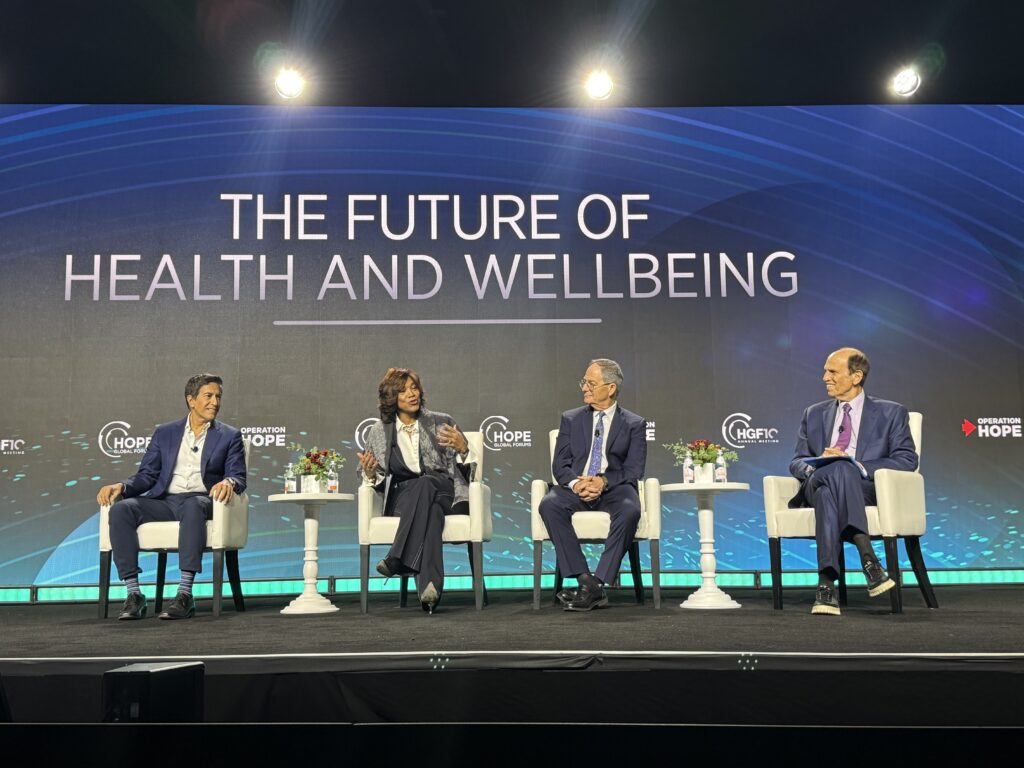
As we neared the end of our conversation, I asked Sanjay to distinguish between two ideas that often get conflated: lifespan and health span.
Lifespan is the years of your life. Health span is the life in your years.
Most of us are chasing the former without building the latter. We are working ourselves half to death to arrive at a finish line where we are too depleted to enjoy anything we built. I do not want that for you. I do not want that for myself.
Sanjay offered some practical science: bone density and muscle mass are among the strongest predictors of long-term health span. Social connection generates healing hormones that medication cannot replicate. And uncertainty — when we do not know how to read the world around us, including the financial world — is one of the most physiologically corrosive forces a human being can face.
Teaching people how to be comfortable with uncertainty. Teaching people how to read risk. That is the work. That is what financial literacy does at its deepest level.
Ambassador Andrew Young — my mentor, our Global Spokesperson at Operation HOPE, Inc., who was actually alive on the line during our recording (you cannot make this up) — is ninety-four years young and still giving two speeches a day. He has purpose. He is leaning into meaningfulness. The light of aspiration is still on.
Don’t retire. Rewire. And do it with your health intact.
Listen. Then Share.
I want to ask something of you personally. This is Season 3 of Money and Wealth on the Black Effect Podcast Network and iHeartRadio. We are now one of the top one percent of all podcasts in the world. We have earned that platform because of you.
Take this episode. Share it with your family. Share it in your fraternity or sorority group chat. Play a five-minute clip at your next team meeting. Start a conversation that might not have happened otherwise.
We are not just trying to help you live longer. We are trying to help you live better — with more joy, more health, more possibility, and more peace of mind than the zip code or the credit score you were handed ever said you deserved.
You deserve better. And the science agrees.
Let’s go.
— John Hope Bryant
LISTEN NOW
Health Is Wealth: John Hope Bryant & Dr. Sanjay Gupta On The Science Of Living Better
Money and Wealth with John Hope Bryant · Season 3
Available on iHeartRadio and the iHeart App
#HealthIsWealth #FinancialLiteracy #CapitalismForAll #EconomicEmpowerment #OperationHOPE #BryantJournal
John Hope Bryant — founder of Bryant Group Ventures, Operation HOPE, Inc, publisher of the Bryant Journal and author of his 7th book Capitalism for All: Inclusive Economics and the Future Proofing of America, now a bestseller. Bryant was recently named a member of the Forbes 250.