Why America’s 250th Anniversary Demands an Inclusive Capitalism That Works for Everyone
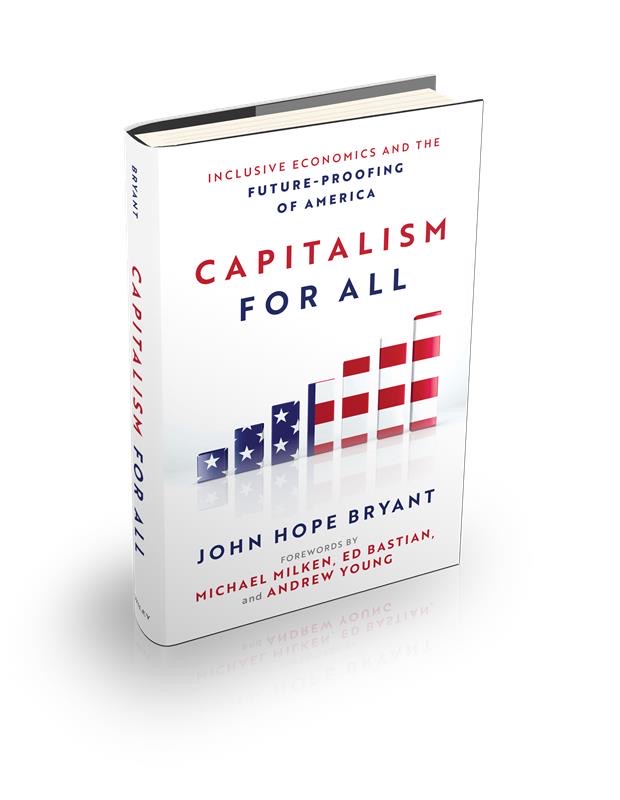
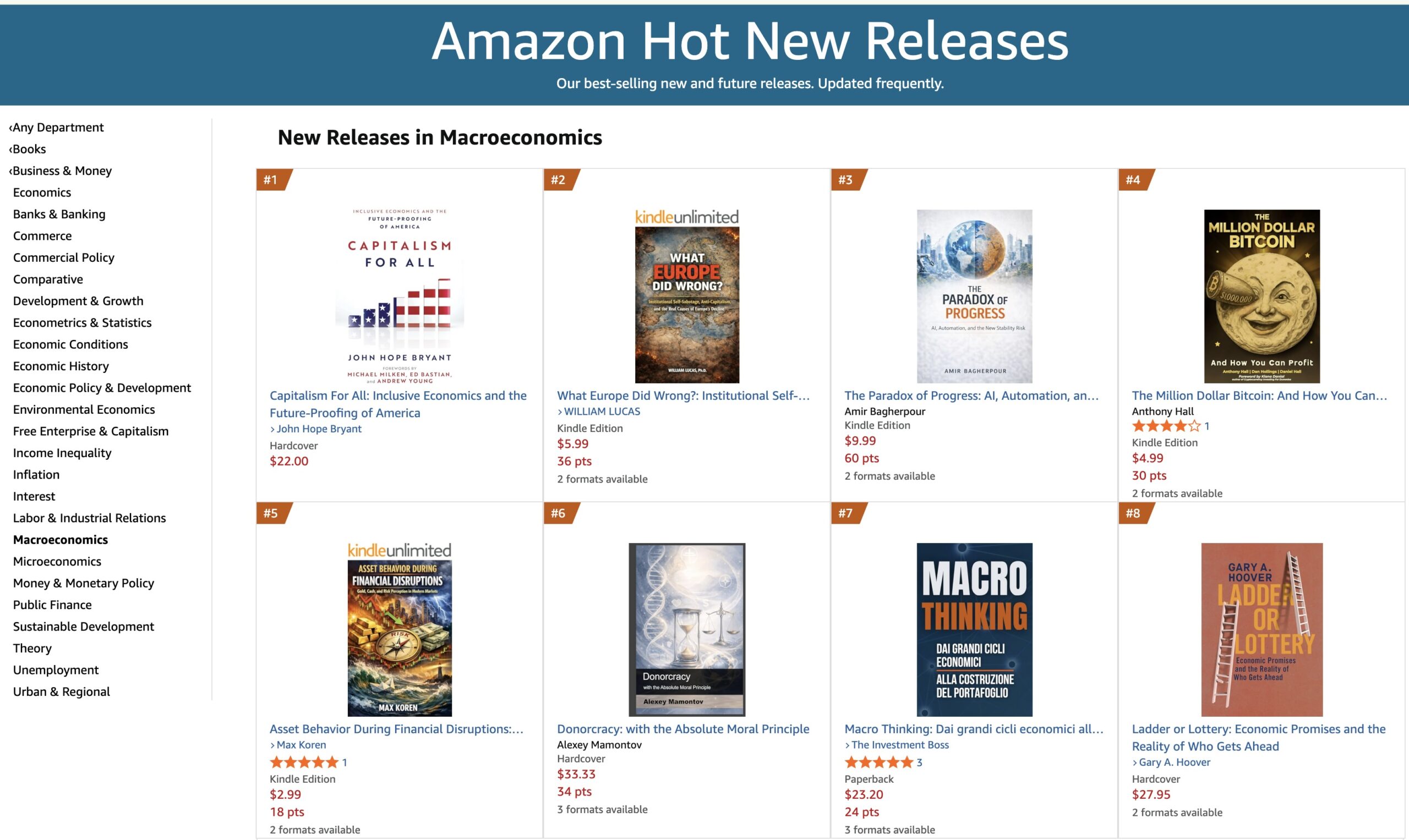
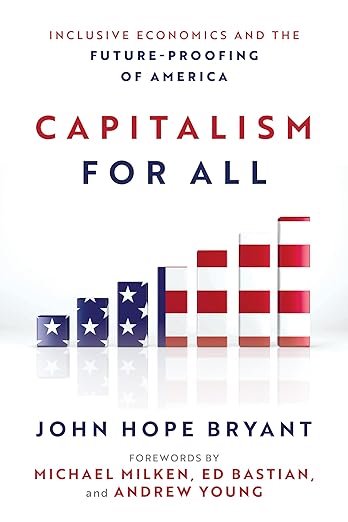
Editor’s Note: Today, Wiley Publishing formally announced the release of John Hope Bryant’s newest book, Capitalism for All: Inclusive Economics and the Future-Proofing of America, set to publish March 31, 2026, on the 250th anniversary of the United States. The essay below expands on the ideas behind the book and why this moment in history demands a new economic approach.
America turns 250 this year.
That milestone is more than a celebration. It is a checkpoint. A moment to ask whether the economic system that powered America’s rise is prepared to carry the nation forward for the next 250 years.
Today, Wiley announced the release of my new book, Capitalism for All: Inclusive Economics and the Future-Proofing of America, arriving March 31, 2026. The book is both a reflection on where America has been—and a blueprint for where we must go if we intend to remain the world’s leading economy.
This book is not an argument against capitalism. It is an argument for it—done right, done inclusively, and done with intention.
Capitalism remains the most powerful economic engine ever created. It has lifted more people out of poverty than any system in human history. But capitalism only works when people can actually participate in it. When large portions of the population are locked out of opportunity, capitalism doesn’t fail them—we fail to extend capitalism to them. And in doing so, we weaken the nation itself.
The Middle Class Is America’s True Superpower
America’s greatest competitive advantage has never been cheap labor, natural resources, or even military strength alone. Our real superpower has always been a broad, confident, and growing middle class.
A strong middle class fuels innovation, stabilizes democracy, strengthens national security, and sustains global leadership. When the middle class expands, America grows stronger. When it shrinks, everything else becomes fragile.
Inclusive economics is not a social program. It is a growth strategy.
Rebuilding and expanding the middle class—across race, geography, and background—is the most practical way to restore economic confidence, social cohesion, and long-term competitiveness. You do not protect America by pulling people out of the economy. You protect America by pulling them in.
Hope Is Not Emotional. It Is Structural.
For more than three decades, I have worked in low-wealth communities across America and around the world. I have seen what happens when people are given access—not handouts, but handholds.
Financial literacy. Credit coaching. Entrepreneurship pathways. Workforce skills. Ownership opportunities.
What I’ve learned is simple: people do not lack ambition. They lack access.
Hope is not a slogan. Hope is what happens when systems say “yes” instead of “no.” When opportunity is visible, achievable, and real. Inclusive economics is about rebuilding those opportunity ladders—intentionally and at scale.
Technology Must Lift People, Not Leave Them Behind
Artificial intelligence and emerging technologies will reshape every industry, every job category, and every economy. That reality is not coming—it is already here.
The question is not whether technology will change America. The question is whether technology will divide America further or help close the gaps that threaten our future.
Technology itself is neutral. Outcomes are not.
If we allow AI to concentrate opportunity only at the top, we will accelerate inequality and instability. But if we deploy technology as an equalizer—through education, reskilling, entrepreneurship, and access to capital—we can future-proof America in ways previous generations never could.
Policy, leadership, and values determine whether innovation becomes a weapon of exclusion or a tool of inclusion.
Stakeholder Capitalism Is Smart Capitalism
There is a persistent myth that inclusive capitalism is anti-profit. The evidence shows the opposite.
Companies that invest in workers, communities, and long-term value creation consistently outperform those that chase short-term gains alone. Stakeholder capitalism is not a moral compromise—it is a competitive advantage.
In Capitalism for All, I outline practical frameworks for business leaders to grow profitably while expanding opportunity. Doing well and doing good are not opposing goals. In a modern economy, they are inseparable.
A Playbook for Action—Not Just Ideas
This book is structured around three core sections:
First, it makes the case for inclusive capitalism as a national imperative—economically, socially, and geopolitically.
Second, it provides practical tools: business plans, policy frameworks, and community-level strategies that have been tested in the real world.
Third, it charts a path forward—domestically and globally—for an America that leads not by exclusion or fear, but by opportunity and confidence.
This is a book for business leaders, policymakers, educators, community builders, and citizens who understand that America’s future strength depends on the collective prosperity of its people.
The Choice Before Us
As America enters its next chapter, we face a defining choice.
We can retreat into zero-sum thinking, division, and scarcity—or we can recommit to the bold idea that made this nation exceptional in the first place: that shared opportunity creates shared prosperity.
Inclusive economics is not a political ideology. It is an American one.
If we want to future-proof this nation for the next 250 years, we must build a capitalism that works for all.
That is how we honor the past.
That is how we secure the future.
Pre-Order your advance copy today. Capitalism for All: Inclusive Economics and the Future Proofing of America, published on the 250th Anniversary of America’s birth as a nation.
Read the official Wiley book announcement, issued today via WebWire:
“John Hope Bryant’s New Book Reveals How Inclusive Capitalism Can Restore American Prosperity and Secure the Nation’s Economic Future.”
👉 Link to the Wiley/WebWire release