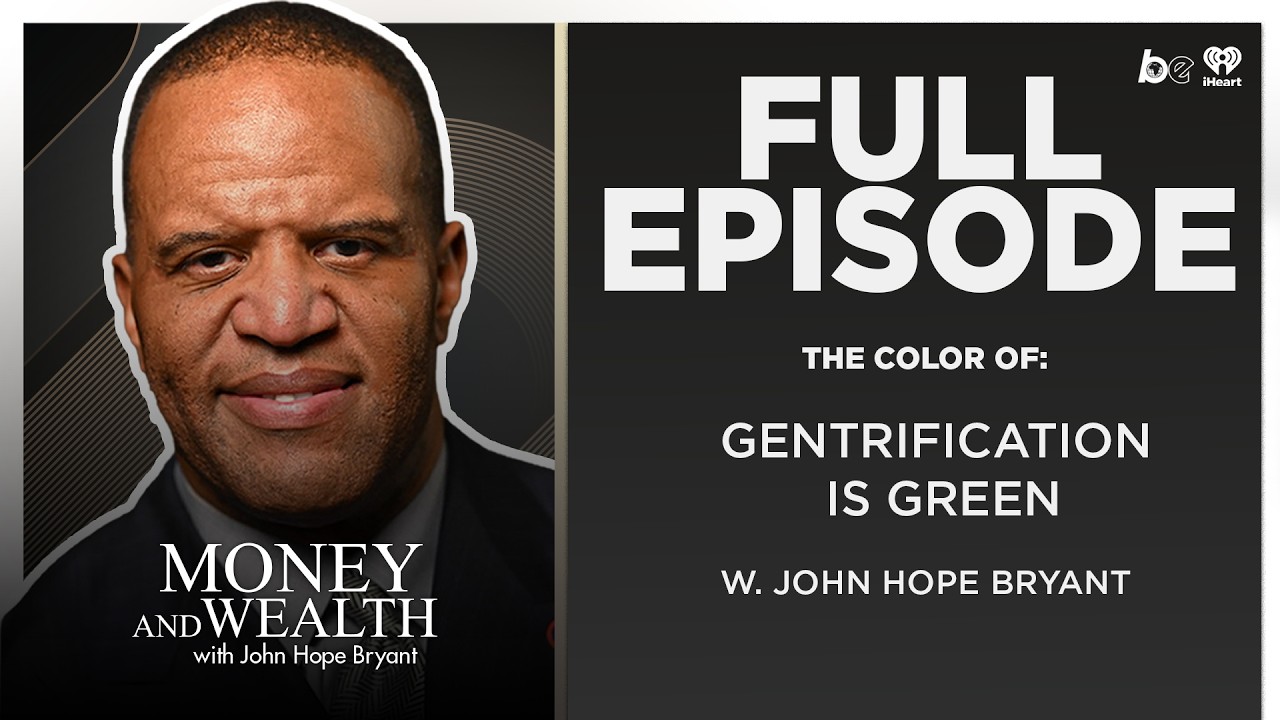
I do not come to Money & Wealth solo very often, and when I do, I am bringing some heat. This week I took on a word that makes people flinch: gentrification. Here is what I said up front. When mainstream America has a headache, Black and brown folks have pneumonia, yet we are all sick. The color of gentrification is not black or white, red or blue. It is green. The question is who gets the green.
What gentrification actually means
The dictionary definition of gentrification has nothing to do with race. It is a movement to middle-class values, and we should want that. We should want families to move from the struggling class to the working class, to the middle class, to the upper middle class, and beyond. My thesis is that we should not fear investment, revitalization or rising economic value in America’s inner cities. We should fear a model of development that creates wealth without letting long-time residents take part in it.
Paris, and a speech I gave in Lyon
I recorded this while Paris was in the middle of riots. France has the reverse of our problem. Their poor and struggling families live in the suburbs while the wealth moved to the city center. Years ago, when I was a Goodwill ambassador for the United Nations Conference on Trade and Development, I gave a speech in Lyon and said that ignoring the French suburbs was setting the country up for unrest. They booed me. Within two years there was rioting. I do not support what is happening in the streets now, because the people who get hurt are small business owners, many of them immigrants who came up from nothing.
Brooklyn and the wrong question
I also weighed in on a public debate about whether Jay-Z was responsible for the gentrification of Brooklyn and the displacement of Black families. My answer is that the stores in that area were going to be displaced anyway. Sears, Kmart, JCPenney and Blockbuster were everything until they were not. Capitalism is a gladiator sport. It creates and it destroys. The Barclays Center deal was in the works for planning authorities and governments years before Jay-Z saw the business plan, and a number of Black contractors have said they got their opportunity because he leaned in. The real question is not why Brooklyn became valuable. It is why more of the people who made Brooklyn valuable did not get rich along with it.
Inner cities are gold mines, and credit is the key
In the last week before this recording I was in Detroit, Syracuse and Buffalo. Detroit was the richest city per capita in America in the 1950s, and today its average credit score is about 570. I told the leaders I met with that you can almost end the meeting there. Seventy percent of this economy is consumer spending, and you cannot do much at 570. Operation HOPE has mapped every zip code in America by credit score. In a 570 neighborhood you find the check casher, the payday lender, the title lender, the pawn shop and the liquor store in a row. You also find a homeownership rate in the high 20s, lower graduation rates and shorter lives. My analysis found that for every 50-point increase in credit score, people live about five more years. A 700 credit score neighborhood fifteen minutes away can mean a life span about 20 years longer.
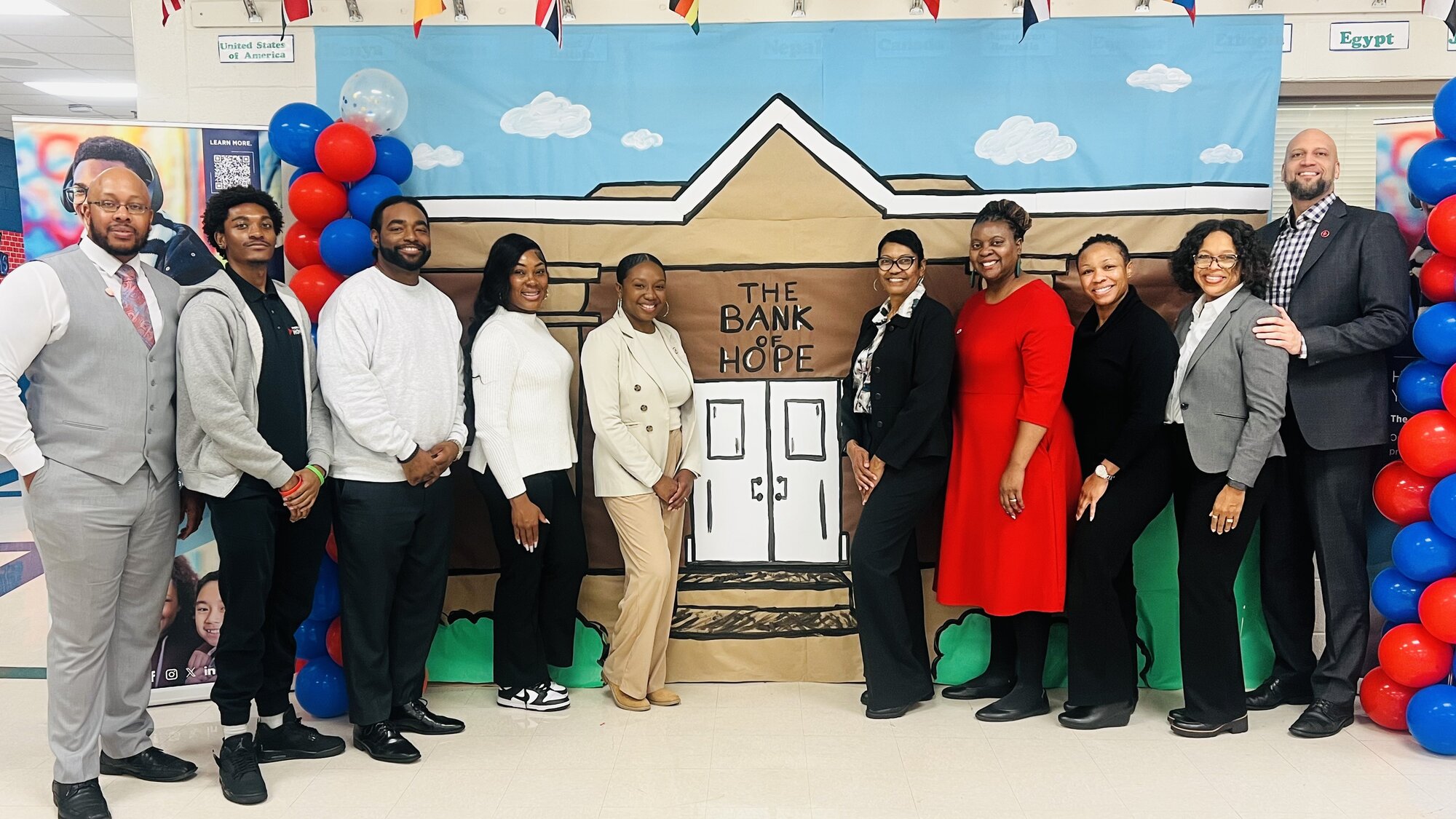
At Operation HOPE we work inside bank branches, and we help clients raise their credit scores by 54 points in six months, cut their debt by $3,800 and add $1,200 in savings. With a score of 680 to 700, a bank can often say yes. That is how we have helped direct $4.5 billion of capital to homeowners, small business owners and entrepreneurs. I gave Detroit a challenge to take home: a 700 credit score Detroit initiative.
We gave some of it away
Nobody in white robes ran us out of Harlem. We let go of it. In Anacostia, the land on the hill next to the water was the worst land to own in the industrial age, because the factories polluted the air and the river. In a clean technology and finance economy it is some of the best land there is, and much of it was lost to unpaid taxes and quick sales. If you owned in Brooklyn, bought at $100,000 or $200,000 and held on, you are sitting on a million-dollar asset today. If you could not keep up the taxes, you could sell and walk away with $800,000 to start over. If you were renting the game, you got nothing. In Atlanta I bought houses for $88,000 and sold them later for about $250,000 each. I did not pick the houses up and move them. That is the power of appreciation.
My mother and the ownership problem
My mother, Juanita Smith, earned $15 to $18 an hour, had a credit score of 854, and built a million-dollar net worth through discipline and ownership. Operation HOPE launched an AI agent in her name, Juanita AI, in August 2026, and you can ask her how she bought a house and how she raised three kids on that income. When I built the Promise Homes Company, we gave residents financial literacy through Operation HOPE at no cost, offered incentives for paying rent on time and for moving from renting to owning, and had half our vendors come from the Black, minority and women-owned businesses in the neighborhoods we served. When you recycle the revenue back into the community, people do not resent you for being an owner there.
Six strategies for turning revitalization into community wealth
Here is the business plan I laid out. One, build credit and financial capability. Two, expand homeownership, because Black homeownership is below 44 percent while the national rate is about 75. Three, protect existing residents with housing stability and anti-displacement policies, down payment assistance and affordable ownership, plus help for long-time homeowners facing rising costs. Four, create community investment opportunities such as community land trusts, shared equity models and resident participation in local developments. Five, help local entrepreneurs acquire existing businesses and commercial property instead of launching a startup with little capital and no customers. The dentist is a business, people, and if the owner is 65 and wants to go play golf, buy it from him. Six, measure neighborhood wealth, not just development activity. Track resident net worth, credit scores, homeownership, business ownership, displacement and wealth retention.
Count millionaires, not millions
Do not just measure how many millions of dollars were invested in a neighborhood. Measure how many millionaires, homeowners and successful entrepreneurs were created from the people already living there. I told listeners that if you do this, the so-called gentrification five years in will include the come-up of the people in the community.
The third reconstruction is ownership
The first reconstruction was freedom, Abraham Lincoln and Frederick Douglass. The second was access, Dr. King, Ambassador Andrew Young, Coretta Scott King and the heroes and sheroes who fought for jobs, polling booths and the right to cash the check. The third is ownership, from the streets to the suites. I put it at 2024 to 2034, and it is the argument of my book, Capitalism for All. You make money during the day. You build wealth in your sleep.
Start with the money already owed to you
Plenty of families say they do not have money. A person earning $35,000 a year with three children can be owed thousands of dollars through the Earned Income Tax Credit, and a large number of eligible people never claim it. If you never filed, it can be claimed retroactively for up to three years. Where is the march for the EITC? That is your money.
Watch the full conversation
Listen to the full episode of Money & Wealth with John Hope Bryant on iHeart, on the Black Effect Podcast Network.
— John Hope Bryant
John Hope Bryant — founder of Bryant Group Ventures, Operation HOPE, Inc, publisher of the Bryant Journal and author of his 7th book Capitalism for All: Inclusive Economics and the Future Proofing of America, now a bestseller. Bryant was recently recognized as a member of the Forbes 250 Greatest Living Self Made Americans, on the occasion of the 250th anniversary of America itself. Get the book →