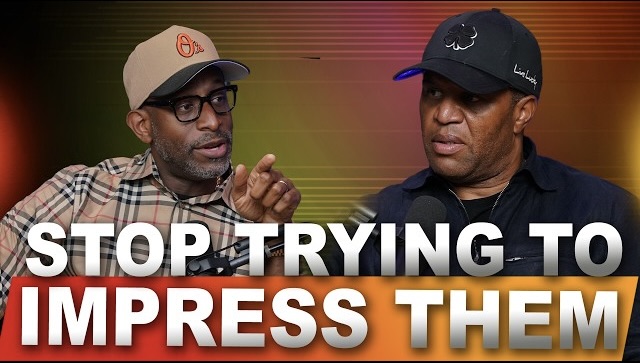
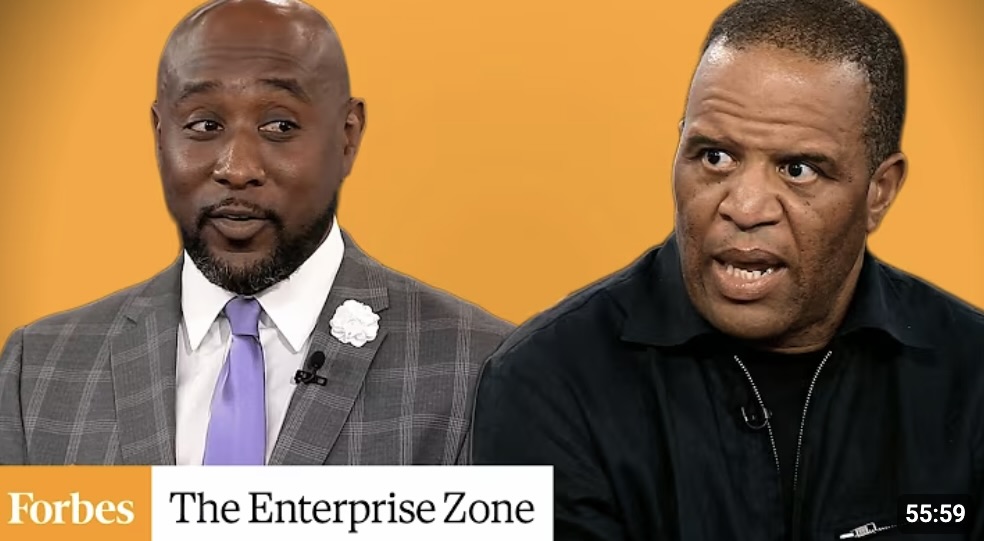
On this episode of The Enterprise Zone, Founder and CEO of Bryant Group Ventures and Operation HOPE John Hope Bryant sat down with Forbes to discuss financial literacy, economic sentiment, and his $1 billion affordable housing impact fund launched alongside CIM Group (CIM-BGV Impact Ventures). Bryant is the CEO of Bryant Group Ventures and discussed his inclusion on Forbes’s 250 Greatest Living Self-Made Americans list, stakeholder capitalism models like profit-sharing, and updates his Operation HOPE organization’s 1 Million Black Businesses initiative with Shopify.
THE BRYANT JOURNAL
THE ECONOMY IS SPLITTING IN TWO. I’M BUILDING THE BRIDGE.
Inside my conversation with Forbes on the K-shaped economy, the $1 billion affordable housing fund, and why I’ve never believed capitalism and community had to be enemies.
By John Hope Bryant
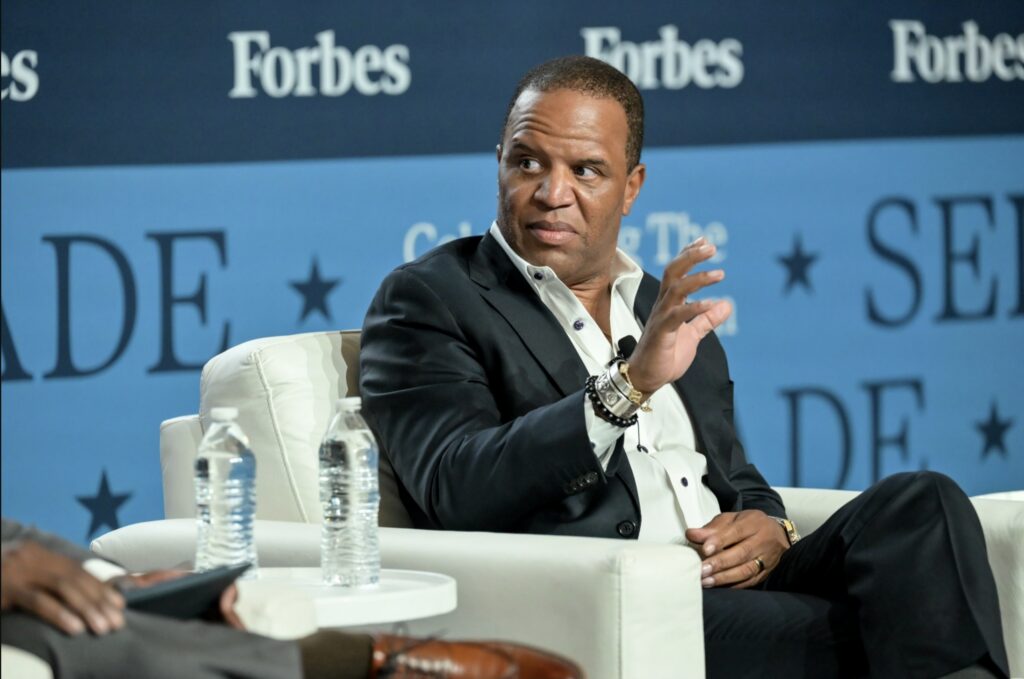
I sat down with Forbes this week for an episode of The Enterprise Zone, taped at the Nasdaq studio in New York, and by the time we wrapped, I realized we’d covered more ground in thirty minutes than most people cover in a year of headlines. Market volatility. The K-shaped economy. A $1 billion housing fund. A list I never expected to be on. And a reminder — one I try to give myself as much as anyone else — that the work is not finished.
Let’s start with the diagnosis, because you can’t fix what you won’t name. Economists have a term for what a lot of Americans are feeling right now but can’t quite articulate: the K-shaped economy. Picture the letter itself — one arm rising, one arm falling, both stemming from the same point. Asset owners, stock holders, people with good credit and existing equity are doing fine, in some cases better than fine. Everyone else — renters, gig workers, families living paycheck to paycheck — is watching the ground shift under them, even while the headline numbers say the economy is strong.
“This isn’t just a data story. It’s a dignity story. And dignity is the one thing you cannot legislate — you have to build it, block by block.”
I’ve spent more than three decades arguing that financial literacy is the civil rights issue of this generation — what I call the Silver Rights movement. A K-shaped economy is what happens when that literacy gap becomes a wealth gap becomes a generational gap. The fix isn’t a slogan. It’s capital, deployed with intention, in the neighborhoods that have been waiting the longest.
Which is why so much of my Forbes conversation centered on the CIM-BGV Affordable Housing Impact Fund — a partnership between Bryant Group Ventures and CIM Group that is building toward $1 billion in capacity to create and preserve affordable housing in markets where affordability has quietly disappeared: Southern California, Georgia, the D.C. Metro, New York Metro, and Florida. Anchor investors like KeyBank, Truist, and Flagstar didn’t sign on because it feels good. They signed on because inclusive capitalism, done right, is good business. That’s the whole premise of stakeholder capitalism — models like profit-sharing that treat working people as partners in outcomes, not just line items in a budget. It is not charity. It is strategy, and it is bankable.
I’ll admit the conversation also touched on something I’m still getting used to talking about out loud: being named to Forbes’s list of the 250 Greatest Living Self-Made Americans, alongside people like Oprah Winfrey and LeBron James. I told Forbes what I’ll tell you here — that recognition doesn’t belong to me alone. It belongs to every kid in South Central, in the Delta, in Appalachia, who was told the ceiling was fixed. Self-made was never about doing it by yourself. It’s about refusing to let your circumstances write your ending. If anything, it’s confirmation that the economic plumber work — going in and fixing the pipes nobody else wants to touch — is finally being seen for what it is.
We closed on something closer to home for a lot of small business owners: the continued build-out of the 1 Million Black Businesses Initiative with Shopify, which remains one of the clearest examples of what happens when a platform and a mission-driven organization actually align their incentives. Financial literacy opens the door. Capital walks you through it. Entrepreneurship is what lets you build a house once you’re inside.
None of this happens in isolation. It’s the same argument I made in Capitalism for All — that inclusive economics isn’t a departure from capitalism, it’s the future-proofing of it. A K-shaped economy is not inevitable. It’s a design choice, and I intend to keep designing something better.
Let’s go.
John Hope Bryant — founder of Bryant Group Ventures, Operation HOPE, Inc, publisher of the Bryant Journal and author of his 7th book Capitalism for All: Inclusive Economics and the Future Proofing of America, now a bestseller. Bryant was recently named a member of the Forbes 250. Get the book →
#CapitalismForAll #SilverRights #FinancialLiteracy #InclusiveCapitalism #OperationHOPE #BryantGroupVentures #AffordableHousing #StakeholderCapitalism #Forbes250 #1MillionBlackBusinesses