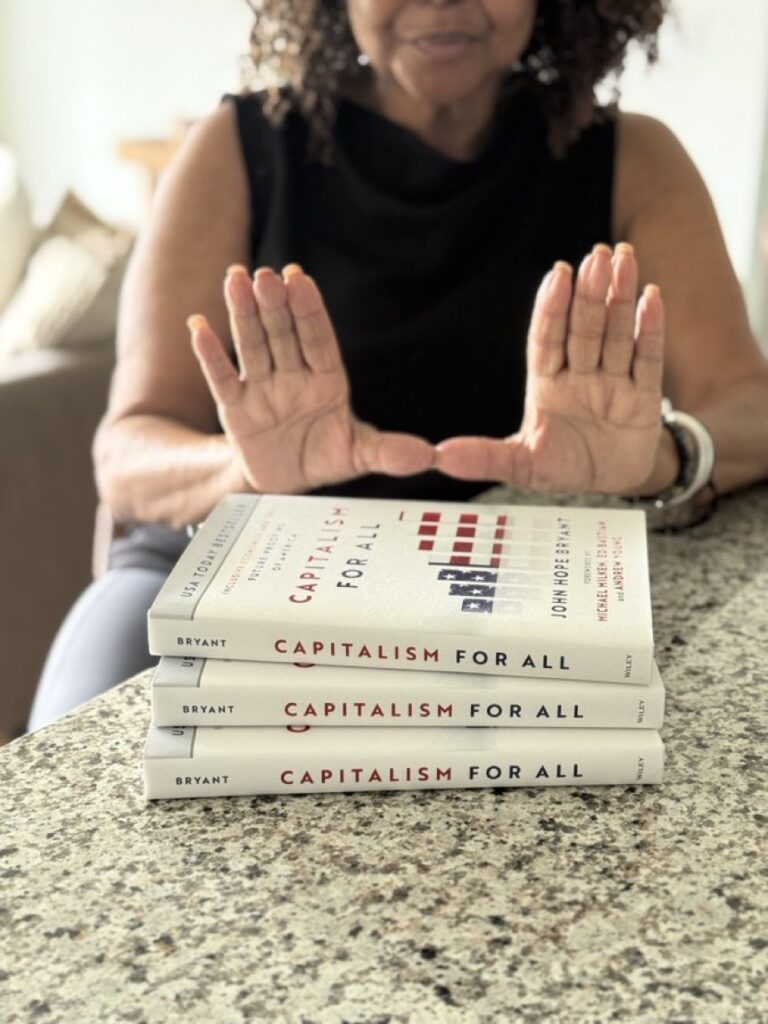
This piece is inspired from my newest bestselling book ‘Capitalism for All.’
A Bryant Journal Foundations piece
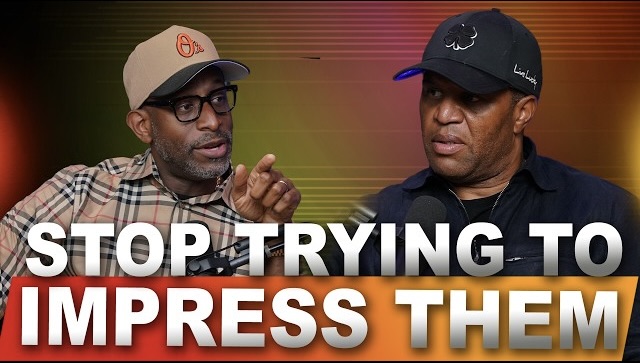
I have said the phrase “Third Way” in boardrooms. I have said it in congressional hearings. I have said it in church basements and community centers and, more recently, in a radio studio with Charlamagne Tha God asking me questions he already half-knew the answers to. I sort of argued for ‘a Third Way’ in “The Get It Done Economy: A Manifesto for the Passionate Middle of America” piece I wrote on May 7th, 2026 of this year. Which was a case for the moderate political middle of America, that is the overwhelming majority of all in America, but have almost no ‘voice.’
But I have never sat down and written out, in one place, what I actually mean by it. So let me do that now.
Here is the argument, in its simplest form.
One side says the market will fix it. Leave capitalism alone, let it run, and eventually the gains trickle down to everybody. The other side says the market is the problem. Tear it down, redistribute what’s left, and build something else in its place. Both sides have been having this same fight for a hundred years, in different clothes, with different words. And both sides are wrong.
Capitalism is a terrible system — except for every other one. Democracy too.
That is not a punchline. That is the whole argument, if you sit with it long enough. The problem was never capitalism itself. The problem is that we built a capitalism with the door only half open. We handed some Americans a ladder, gave others a rope, and told a third group to just keep jumping and hope they land on something solid.
The Third Way is not a compromise between left and right. I need to be precise about that, because people hear “third way” and assume I mean split the difference — a little more market, a little more government, meet in the middle. That is not it. The Third Way is a different question entirely. Not “how much government” or “how much market.” The question is: does everyone have access to the tools? Financial literacy. Capital. A bank account that doesn’t charge you for being poor. A credit score you understand and can build. Ownership — of a business, a home, a piece of something that compounds.
It is not about giving handouts. It is about creating hand-ups. Give a person those tools and get out of the way, and you don’t need to argue about ideology anymore. You need to argue about access. That’s a fight I know how to win, because it isn’t a fight about belief. It’s a fight about arithmetic.
Here’s the arithmetic. You cannot have a thriving democracy without a thriving middle class. And you cannot have a thriving middle class if a third of the country is standing outside the economy looking in. That’s not a moral statement, though it is also that. It’s a load-bearing fact about how the whole structure holds up. An economy that leaves a third of its people behind isn’t just unfair. It’s inefficient. It’s an engine running on two cylinders and wondering why it can’t get up the hill.
So that’s the Third Way. Now let me tell you where the Third Reconstruction fits into it, because the two ideas are joined at the hip. I will be driving down in the Third Reconstruction next by the way, so stay tuned for that one, written and long form Money & Wealth Podcast (subscribe and follow).
After the Civil War came Reconstruction — a brief window when the country tried, imperfectly and then violently reversed course, to build real citizenship for people who had been property. After the Great Depression came the New Deal. After the Civil Rights Movement came what I have long called the economic rights movement — the fight to turn legal equality into economic equality, still unfinished, still underway. I have come to believe we are living inside the next chapter of that fight, and lately I have started calling it by a plainer name: the Third Reconstruction.
We have been living off the gains of the Civil Rights Movement for sixty years. Coasting on it, some of us, without noticing the tank was running low.
Here is the hard truth I have started saying out loud, including in rooms where it is not entirely comfortable to say it: some of those protections are being stripped away right now, in real time, through courts and rulings and quiet policy change, and too many of us are still walking around like it’s 1995. Still assuming somebody in Washington is standing guard. Nobody is standing guard. Not right now.
That is the hard truth. Here is the harder truth hiding inside it, and it’s the one that actually matters: the tools to build something that cannot be taken away by a court ruling or a hostile administration have never been more accessible than they are today. A credit score. A business plan. An AI tool that costs less than a car payment and puts a financial advisor in your pocket. The Civil Rights Movement fought for the right to walk through the door. The Third Reconstruction is about what you do once you’re standing inside the room — because a right without a resource is just a door somebody forgot to build stairs to.
The Third Reconstruction does not start in Washington. I’ve learned that the hard way, after thirty years of also fighting for it in Washington. It starts in kitchens. It starts in barbershops and church fellowship halls and, yes, it started for me one morning in a radio studio, in front of an audience that had every right to be skeptical of capitalism, because capitalism has not always treated them right. It earned its way into that room. It has to earn its way into every room. Nobody is owed belief. You build it, person by person, ledger by ledger, credit score by credit score.
I think about my mother sometimes when I talk about this — a woman who built something lasting out of almost nothing, not because the system made it easy, but because she understood something the system didn’t: that dignity and ownership are the same word wearing different clothes. That is what the Third Way protects. That is what the Third Reconstruction is fighting to secure for everybody else’s mother, too.
We are not going to argue our way into the Third Reconstruction. We are not going to legislate our way into it alone, either, though the law matters and always will. We are going to build our way into it — one credit score, one small business, one financially literate teenager at a time. Every one of them a dreamer with a shovel in his hands, because the real color that matters, in the end, is green.
Pick one door. Walk through it. Then hold it open for the next person.
That’s the assignment. That’s always been the assignment.
This piece is part of the Capitalism for All Foundations series — read the full case here.
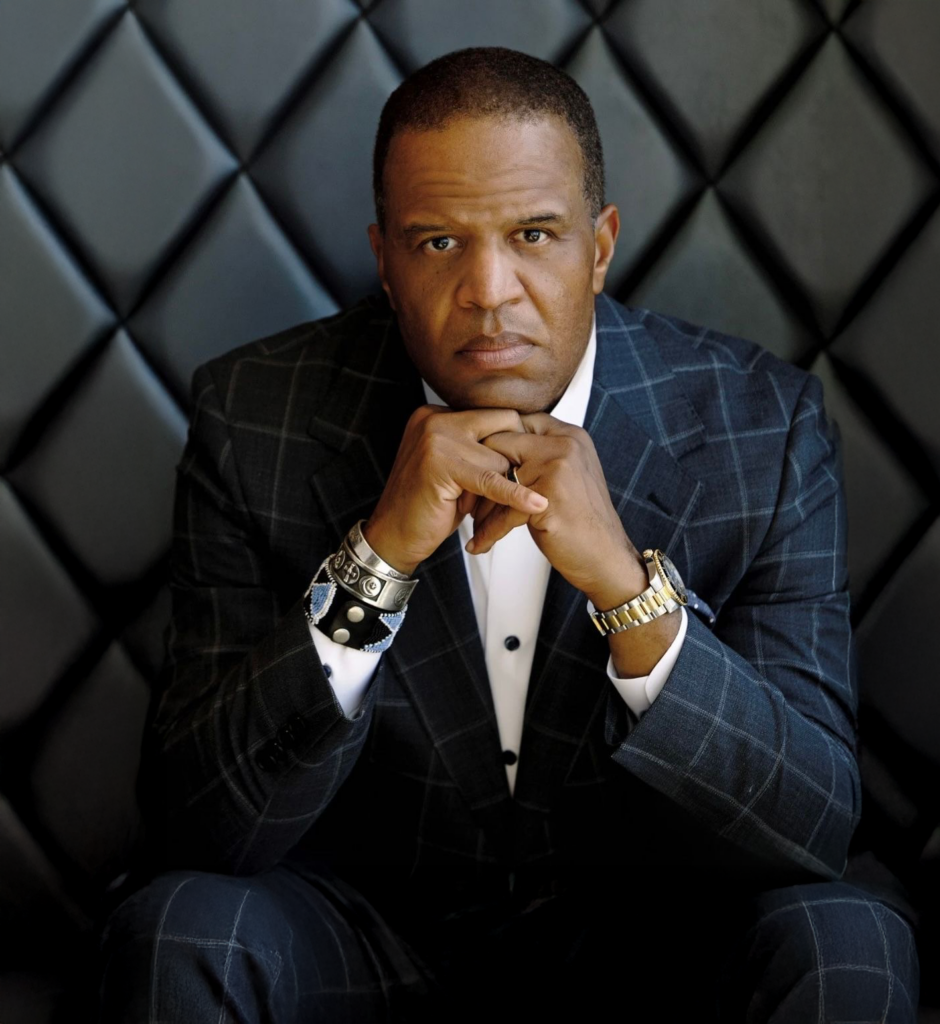
John Hope Bryant — founder of Bryant Group Ventures, Operation HOPE, Inc, publisher of the Bryant Journal and author of his 7th book Capitalism for All: Inclusive Economics and the Future Proofing of America, now a bestseller. Bryant was recently recognized as a member of the Forbes 250 Greatest Living Self Made Americans, on the occasion of the 250th anniversary of America itself. Get the book →