A Manifesto for the Passionate Middle of America. Seven Principles for an Economy That Works the Way It Was Supposed To. By John Hope Bryant, from the Milken Global Conference. On Operation HOPE’s Birthday week (actual birthday anniversary was May 5th 2026), in America’s 250th Year.
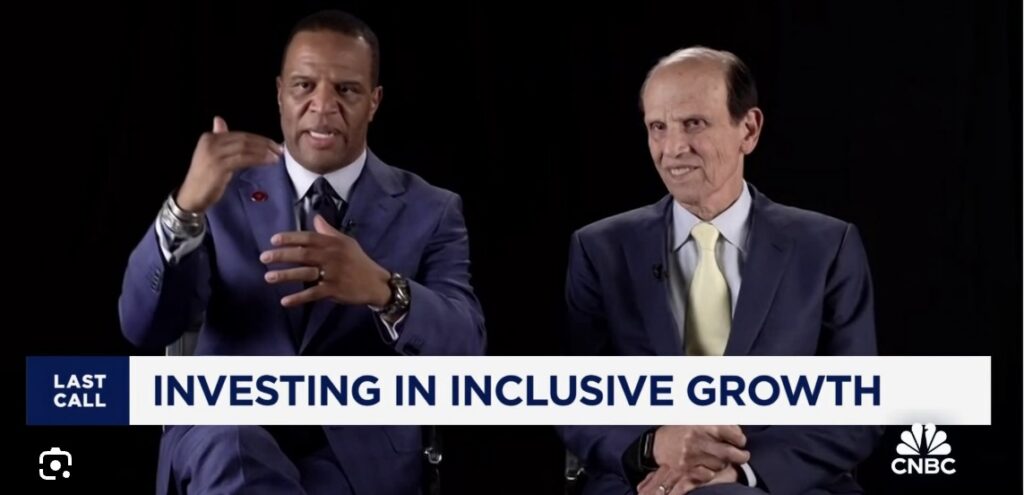
John Hope Bryant
PART ONE: THE ARGUMENT
I want to make a capitalist argument.
Not a moral argument. Not a social one. Not a left argument or a right one. A pure, data-driven, show-me-the-returns argument for why the single most powerful growth strategy available to the United States economy is one that most of the country keeps filing under the wrong category.
They call it inclusion. I call it capitalism operating at full capacity.
Here is the formula, and it is not complicated: every time the United States has meaningfully expanded who participates in its economy, the economy has expanded. Every time it has contracted participation — through exclusion, discrimination, or structural barriers — it has paid a measurable price in suppressed output. This is not theory. It is the most thoroughly documented pattern in American economic history.
I did not learn this in a seminar. I learned it in Compton, California, where I grew up with nothing — no money, no connections, no safety net. What I had was a country that, imperfectly and sometimes only after a fight, let me build something. Free enterprise did not care what I looked like. A credit score did not ask who I voted for. Capital, when I could access it, was colorblind in a way that most of our national arguments have never been.
Today, Operation HOPE and Bryant Group Ventures represent approximately $5 billion in combined economic activity — built from the same premise I am asking the country to adopt: that broad-based economic participation is not a favor to the disadvantaged. It is a growth strategy for everyone.
The conversation is not black or white. It is not red or blue. It is economic green — the only color that has ever been truly colorblind.
PART TWO: THE PROOF
The skeptic’s first question is always the same: how do you know inclusion works? The answer is that we already ran the experiment. The results are in. And they are not close.
The Fifty-Year Proof of Concept
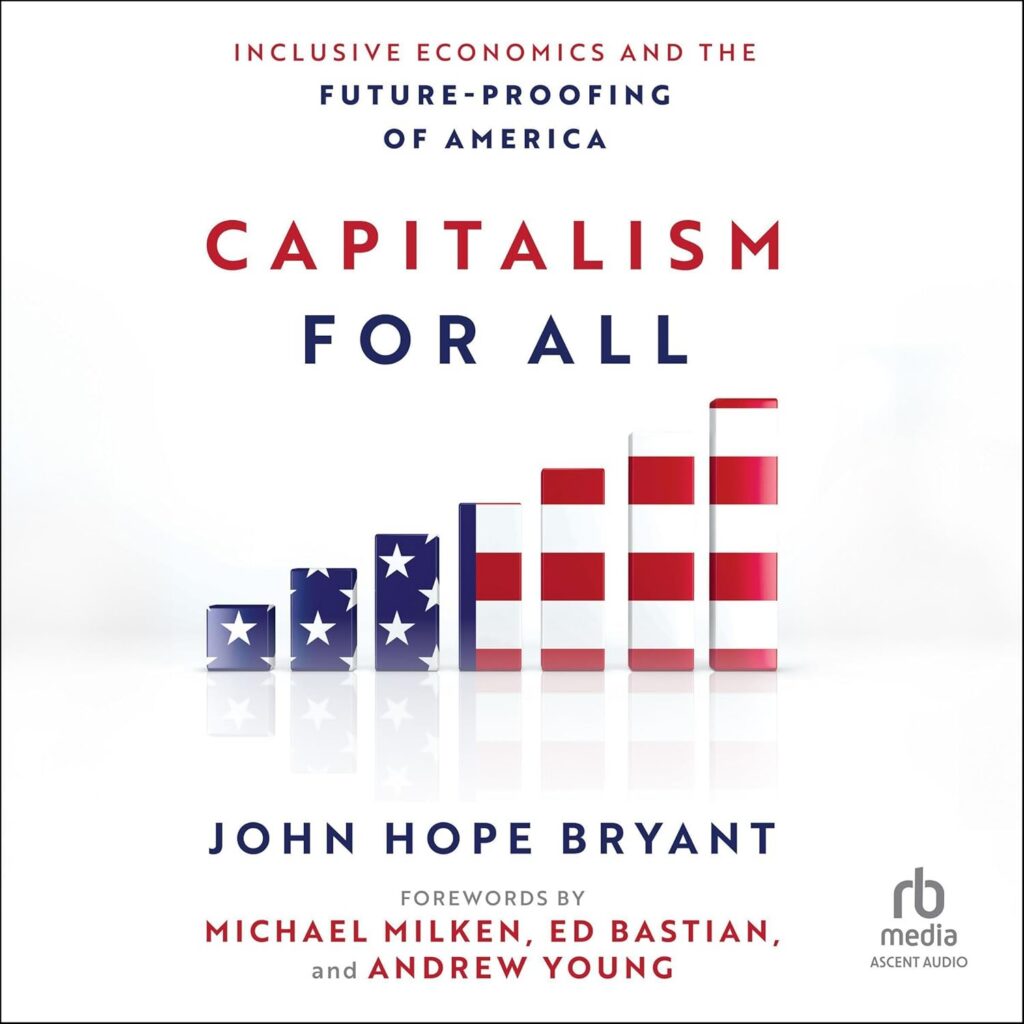
As I make the case in my bestselling new book ‘Capitalism for All: Inclusive Economics and the Future Proofing of America,’ in 1972, a woman in America could not open a bank account without her husband’s signature. She could not apply for a credit card independently. She could not secure a business loan on her own terms. Half the productive capacity of the American economy was structurally locked out of the financial system — not because of any market signal, but because of law and custom.
Then things changed. The Equal Credit Opportunity Act. Title IX. Expanding workplace protections. Over the course of a single decade, women gained meaningful access to the formal economy. What happened next is the proof of concept that should settle this debate permanently.
Female labor force participation rose from 43% to 57%. Women now own approximately 42% of all U.S. businesses. They earn the majority of college and advanced degrees. Their total economic contribution has grown from roughly $1.3 trillion in inflation-adjusted terms to more than $10 trillion annually.
The people who said women’s full economic participation would be disruptive were wrong. The economy grew. That was not ideology. That was fifty years of inclusion compounding into trillions of dollars of output. Apply the lesson.
The Price Tag on the Lesson We Have Not Applied
Citigroup’s own economists — not a government agency, not an advocacy organization, but Citigroup — calculated that racial inequality alone has cost the United States $16 trillion in lost GDP since 2000. The single largest line item: $13 trillion in lost business revenue from discriminatory lending to Black entrepreneurs, with 6.1 million jobs never created as a result.
Those are not Black jobs that never existed. Those are American jobs. American tax revenue. American consumer spending that never entered the economy. This is a balance sheet problem, and balance sheet problems do not care about your politics.
$16 trillion in lost GDP. 6.1 million jobs never created. Not a projection — a receipt. — Citigroup GPS, 2020
The Demographic Math That Changes Everything
Ten thousand Baby Boomers turn 65 every single day. By 2030, every Boomer will have crossed that threshold. The native-born banking market is 95.8 percent saturated — there is almost no net-new customer growth left among American-born citizens.
Meanwhile, the Congressional Budget Office projects that immigration alone will add $8.9 trillion to GDP through 2034 and 5.2 million workers to the labor force by 2033. The country’s birth rate is below replacement. Between $84 trillion and $100 trillion in accumulated wealth is transferring to the next generation.
These are not political opinions. They are actuarial facts. And they all point to the same conclusion: the U.S. economy cannot sustain its current trajectory without expanding who participates in it. The passionate middle does not need to agree on every policy to agree on arithmetic.
PART THREE: THE HIDDEN CONSENSUS
Here is something that should give all of us hope.
Gallup reports that a record 45 percent of Americans now identify as political independents — the highest figure ever measured, with both major parties at just 27 percent each. Fifty-six percent of Gen Z declines to affiliate with any party at all. And the number that matters most: nearly half of Republicans and more than a third of Democrats now say their own party has become too extreme. Not the other side. Their own side.
Tens of millions of loyal party members — people who have not left their party — are privately hungry for a more productive conversation. They are not switching sides. They are looking for a better framework within whatever side they are on. Add them to the 150 million independents and you have something close to a national supermajority that already agrees on the basics: get practical, build something, make the economy work for everyone willing to work.
I do not read those numbers as a crisis. I read them as the single most encouraging data point in American public life. The consensus already exists. It is waiting for a framework that gives it a name and a direction.
I am not a Democrat or a Republican. I am a member of the Get It Done Party. It is not a party. It is an operating system.
Across race, geography, income, and generation, overwhelming majorities of Americans believe you should be able to start a business without needing a trust fund. They believe a credit score should matter more than a zip code. They believe AI should create jobs, not just eliminate them. They believe in earning, building, and owning. That is not a left position or a right position. That is the founding premise of the country.
PART FOUR: THE FRAMEWORK
What follows is the operating system — seven principles drawn from thirty years of building economic opportunity from Compton to Wall Street, and from the argument at the center of Capitalism For All. They are designed to be adopted by anyone: a governor, a mayor, a CEO, a school board, a community bank, a church, a family. The framework is open source. Take it. Use it. Put your name on it. I do not need the credit. I need the results.
I. A Credit Score Is More Powerful Than a Protest Sign
Ownership is the only form of power that cannot be legislated away by a shifting court, a changing administration, or a cultural backlash. A 700 credit score opens doors that no march, no tweet, and no political cycle can open. A business on your block creates jobs that do not depend on who is in the White House. Economic dignity is not granted by anyone. It is built by you. And once built, it compounds.
The first principle of the Get It Done Economy: build something that belongs to you.
II. Free Enterprise Is the Greatest Anti-Poverty Program Ever Created. Let It Work.
Free enterprise works spectacularly well when everyone has genuine access to it, and it fails spectacularly when access is rigged by zip code, race, or the family you were born into. The answer is not more government or less government. It is smarter access. Financial literacy in every school. Credit-building tools in every community. Capital flowing to every entrepreneur with a viable plan, regardless of where they live. That is not redistribution. That is removing friction from the market so the market can do what it does best.
III. AI Is a Tool, Not a Verdict
The argument that artificial intelligence will eliminate all jobs is a false choice — and a dangerous one. You cannot have a consumer economy without consumers. Consumers require income. Income at scale requires employment. The economy is a circle, not a line. Sever one part and the whole thing collapses.
The companies that understand this are training their people in AI, not replacing them. Walmart is already doing it. Amazon’s marketplace is 60 percent small independent merchants. The workforce AI finds when it arrives is the workforce it multiplies. The question is not whether AI eliminates jobs. The question is whether we prepare the workforce to ride it or be run over by it.
IV. Inclusion Is a Growth Strategy, Not a Social Program
The argument about economic inclusion in this country has been stuck for decades in a framework of guilt, grievance, and moral obligation. That framework produced progress, but it also produced fatigue and backlash. There is a better frame — one that bypasses all of that entirely.
Inclusion is a market strategy. Forty million underbanked Americans represent suppressed demand. Millions of aspiring entrepreneurs without access to capital represent unrealized GDP. Communities whose economic potential has never been switched on represent the last great untapped market in the American economy. You do not have to feel guilty about any of that to recognize that leaving trillions on the table is bad business.
The passionate middle does not respond to guilt. It responds to opportunity. Lead with the math.
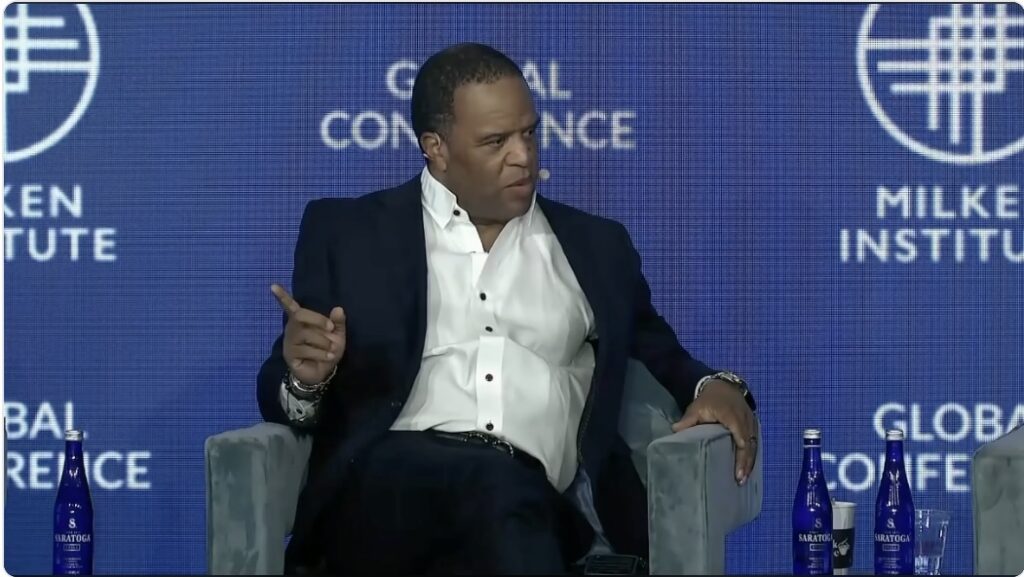
V. The Wealth Transfer Is Either a Bridge or a Cliff
Between $84 trillion and $100 trillion in wealth is transferring from the Baby Boom generation to their heirs over the coming decades. If that transfer flows only to those who already have financial infrastructure — bank accounts, investment accounts, estate plans, financial literacy — it will be the largest concentration of wealth in human history. If it is broadened by genuine access and financial education, it will be the largest democratization of capital ever seen.
That is not a political question. It is a design question. And the design decisions are being made right now.
But there is a number buried inside the wealth transfer that changes everything — and almost no one is talking about it. The McKinsey Institute for Economic Mobility reported in 2026 that by 2035, approximately six million small and medium-size businesses will face ownership transitions as their Baby Boomer owners retire. More than one million of these firms are viable candidates for sale, representing $5 trillion in enterprise value. Today, 92 percent of small-business exits end in closure. Not sale. Not transfer. Closure. Profitable, operating businesses with customers, employees, revenue, and community roots — disappearing because the succession infrastructure does not exist to connect them with new owners.
Here is the opportunity. The heirs, in many cases, do not want these businesses. Operating a company requires work. The other assets in the wealth transfer — real estate, equities, cash — can be enjoyed passively. Businesses cannot. They need someone who wants to build.
The conventional entrepreneurship conversation in this country is organized almost entirely around startups — and startups fail more than 80 percent of the time. Meanwhile, trillions of dollars in proven businesses with existing cash flow, existing customers, and existing employees are sitting on the market with retiring owners who need buyers. What if one trillion dollars of these businesses were acquired by Black Americans — financed through bank lending, SBA programs, and seller financing from the retiring owners themselves? Not startups with an 80 percent failure rate, but proven enterprises with track records, in B and C cities across America where these businesses already operate. And other emerging communities could do the same.
McKinsey’s own data confirms the scale of the gap: under current patterns, women, Black, and Latino individuals combined would capture only 28 percent of the transferring business value. Closing that participation gap could unlock up to $3 trillion in new household wealth through business succession alone.
Now add artificial intelligence to the equation. A new generation of owners acquiring proven businesses and modernizing them with AI tools — automating back-office operations, reaching new markets digitally, optimizing supply chains — could transform community-scale enterprises into million-dollar operations. Not billion-dollar unicorns. Something more powerful and more distributed: a flower with thousands of blooms across thousands of communities. A whole new generation of economic stakeholders, employers, owners, and wealth creators in the towns and cities where America actually lives.
The seller financing mechanism is particularly important. When a retiring owner carries part of the note, they have a direct financial incentive to see the new owner succeed. That is not charity. That is aligned interest — the most powerful force in capitalism. The buyer gets a proven business with built-in mentorship. The seller gets a funded retirement and a legacy. The community keeps its jobs, its tax base, and its supply chain intact. Everyone wins.
Do not start from zero. Buy what already works. Modernize it. Own it. That is how you build a generation of owners.
VI. Economic Green Is the Only Truly Colorblind Color
The United States has spent decades debating inclusion as a moral question, a cultural question, a political question. What it has not done — until now — is frame inclusion as what it actually is: a competitive growth strategy with a fifty-year track record and a business case that any CFO can read.
The countries that will dominate the next phase of the global economy are not the ones that debate whether to invest in their full population. They are the ones that figure out how to run their economies at full capacity. China is not leaving a third of its potential output permanently switched off. The question is whether America will.
VII. The Third Reconstruction Belongs to Everyone
The First Reconstruction freed the body. The Second Reconstruction secured the vote. Both were necessary. Both were incomplete. Both were rolled back by backlash. The lesson: any form of progress that depends entirely on political protection can be undone by political reversal.
The Third Reconstruction builds economic ownership — the kind that lives in balance sheets, credit scores, business equity, and AI tools that belong to you. It cannot be reversed by a court ruling. It cannot be dismantled by a hostile administration. It does not depend on who is in power, because it is not powered by politics. It is powered by enterprise.
It started in Black America because Black America felt the exclusion first and most acutely. But the economic logic is universal. It belongs to the veteran in a rural county who cannot get a small business loan. To the immigrant entrepreneur whose lifetime economic contribution exceeds the native-born average. To the young woman in Appalachia whose credit score is being shaped by a financial system she was never taught to navigate. To every American who wants a plan, not just a party.
The Third Reconstruction does not ask who you voted for. It asks what you are building.
PART FIVE: THE INVITATION
I did not write Capitalism For All for Washington. I wrote it for Main Street — for the teacher, the veteran, the entrepreneur, the first-generation college student, the single mother building a credit score, the small business owner who does not care about politics but cares deeply about whether customers walk through the door.
But I will say this to anyone in a position of leadership, in any party, at any level: the ideas in this book are free. They are open source.
Any governor who wants to make financial literacy a high school graduation requirement can do it tomorrow. Any mayor who wants to partner with community development financial institutions to build credit in underserved neighborhoods can start this quarter. Any CEO who wants to train a workforce in AI rather than replace it can begin today. Any member of Congress who wants to champion a bipartisan financial inclusion agenda can introduce it in this session.
Take these ideas. Use them. Put your name on them if you want. I do not need the credit. I need the results.
The operating system is open source. The only requirement is that you care more about outcomes than credit.
On the 250th anniversary of this country, the most patriotic thing any of us can do is not argue about who loves America more. It is to make America’s economy work the way it was always supposed to — for everyone willing to do the work.
One hundred and fifty million Americans are waiting for permission to say what they already believe: that aspiration is not partisan, that enterprise is not ideological, and that the economy grows best when everyone can participate — not as a favor, but as a formula.
This is that permission. This is the framework. This is the Get It Done Economy.
Not left. Not right. Forward.
#CapitalismForAll
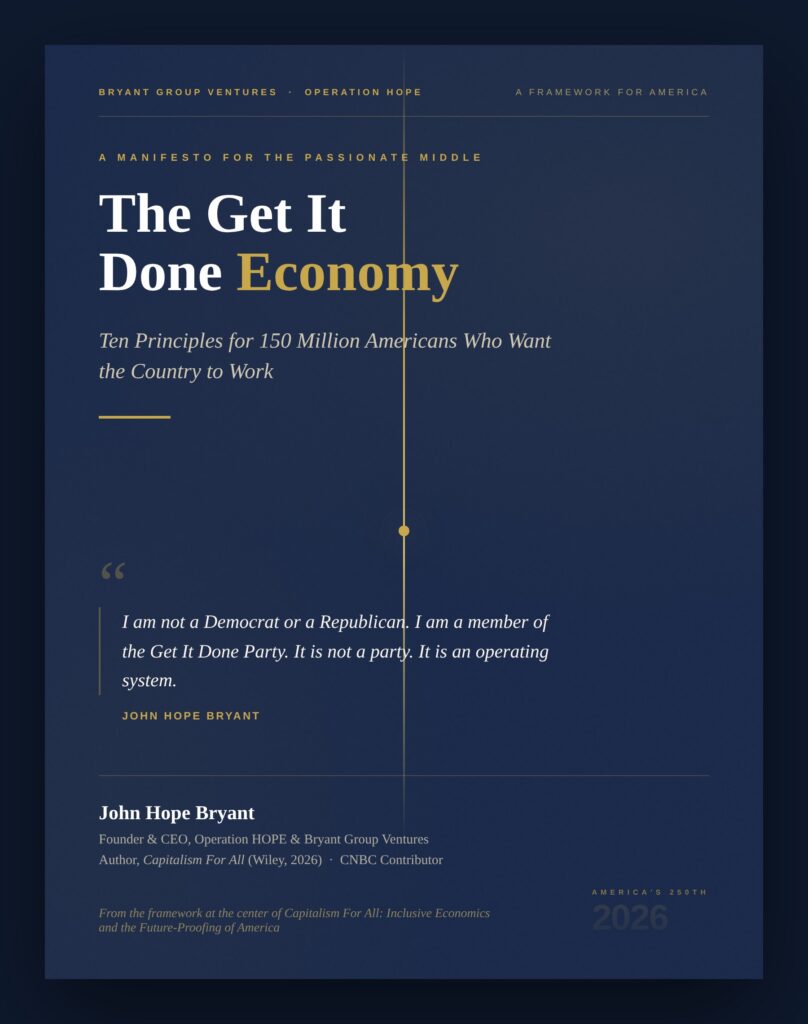
Capitalism For All: Inclusive Economics and the Future-Proofing of America — Available now at all major booksellers.
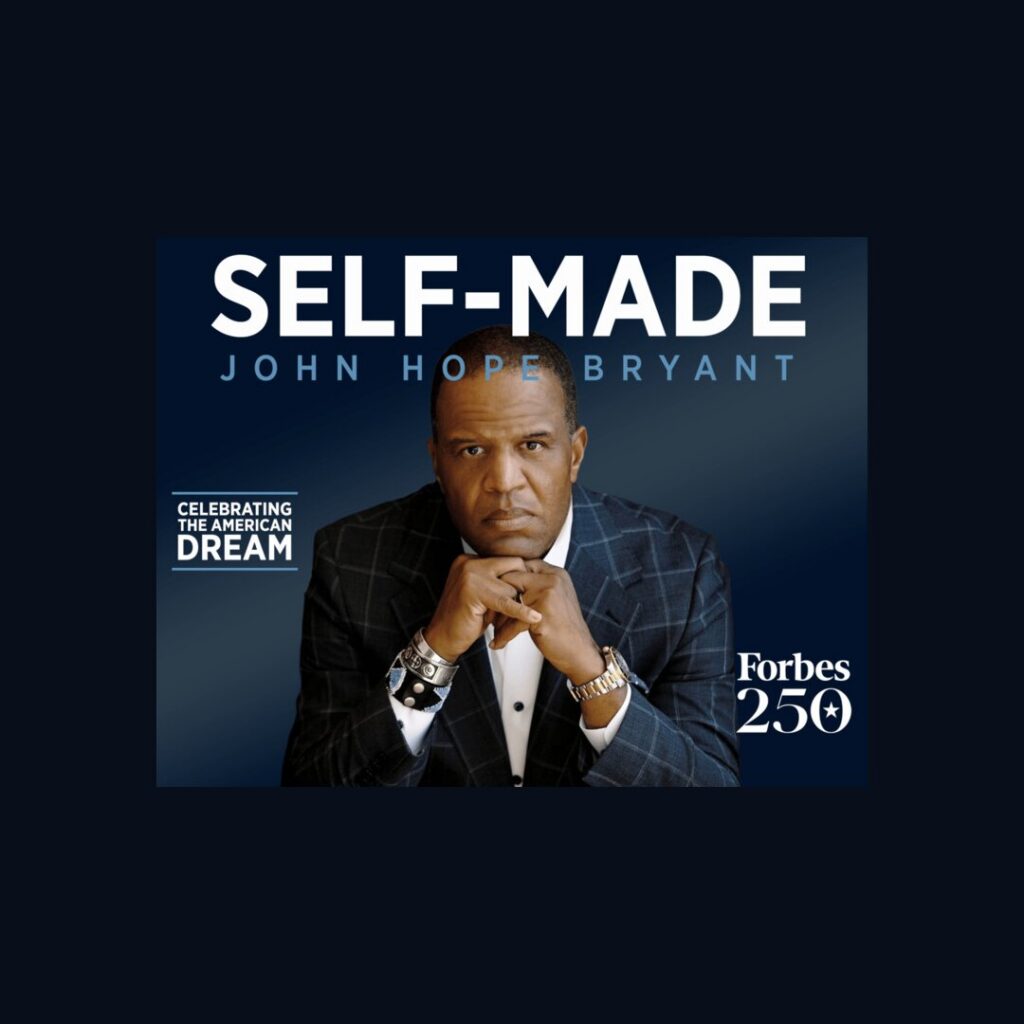
John Hope Bryant — founder of Bryant Group Ventures, Operation HOPE, Inc, publisher of the Bryant Journal and author of his 7th book Capitalism for All: Inclusive Economics and the Future Proofing of America, now a bestseller. Bryant was recently named a member of the Forbes 250.