BRYANT JOURNAL
Haiti’s Forgotten Sacrifice — and the 122-Year Bill It Was Handed for Winning
By John Hope Bryant
There is a story most Americans were never taught in school, and once you hear it, you will never look at a map of the United States quite the same way again. It is the story of Haiti — and it belongs at the center of any honest conversation we have about how wealth in this country was actually built.
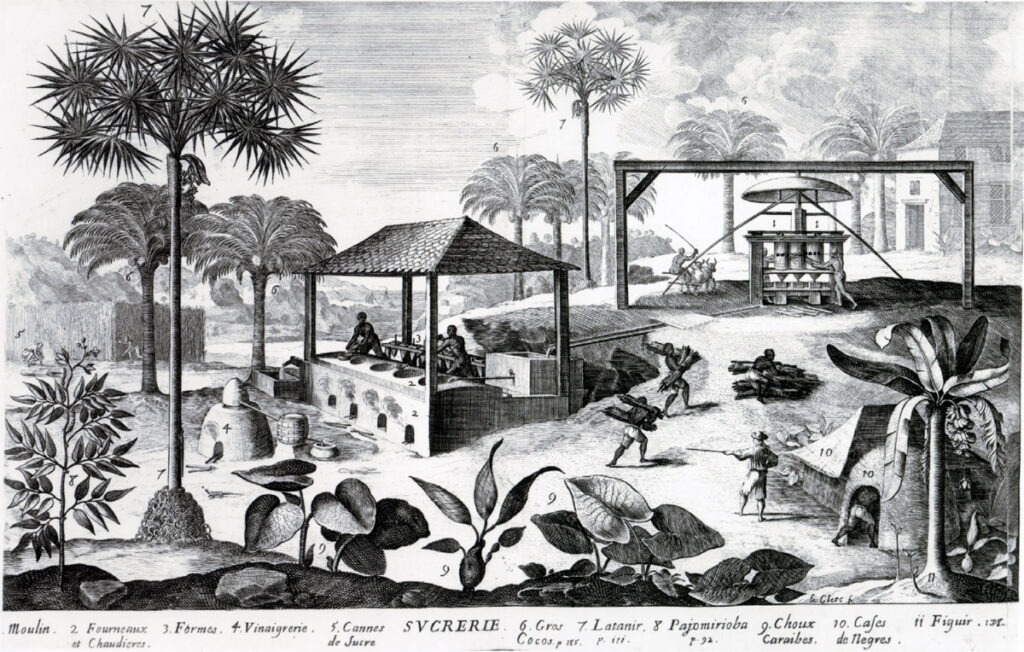
In the late 1700s, the French colony of Saint-Domingue — what we now call Haiti — was not just another outpost in France’s empire. It was the single most profitable colony on earth. Its sugar and coffee plantations, worked by enslaved Africans under brutal conditions, generated more wealth for France than all of Britain’s thirteen mainland American colonies combined generated for the British crown. France did not merely value this island. France’s treasury depended on it.
AN ARMY SENT TO RECLAIM THE CROWN JEWEL
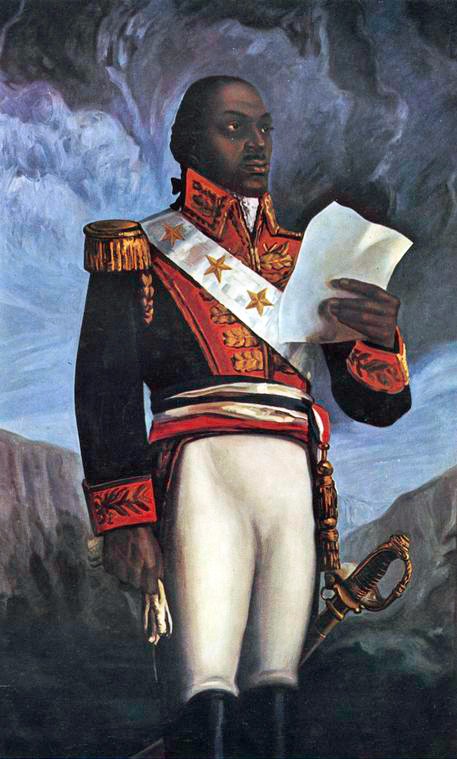
So when the enslaved people of Saint-Domingue rose up and began to win their freedom, Napoleon Bonaparte responded the way any man protects his most valuable asset — he sent an army. Not a token force. Some fifty to sixty thousand troops, one of the largest expeditionary forces to cross the Atlantic to that point, commanded by his brother-in-law, General Charles Leclerc, who was married to Napoleon’s own sister, Pauline. Their orders were blunt: retake the island, restore slavery, and make an example of the people who had dared declare themselves free.
They failed. Yellow fever devastated the French ranks. And the army first built by Toussaint Louverture — carried forward after his capture and betrayal by Jean-Jacques Dessalines — met what remained of Napoleon’s forces on the battlefield and defeated them. On January 1, 1804, Haiti declared itself the first free Black republic in world history, and only the second independent nation in the Western Hemisphere, after the United States itself.
Without Haiti’s victory, there is a real argument that there is no Louisiana Purchase — no United States as we know it on the map.
HOW A SLAVE REVOLT DOUBLED THE SIZE OF AMERICA
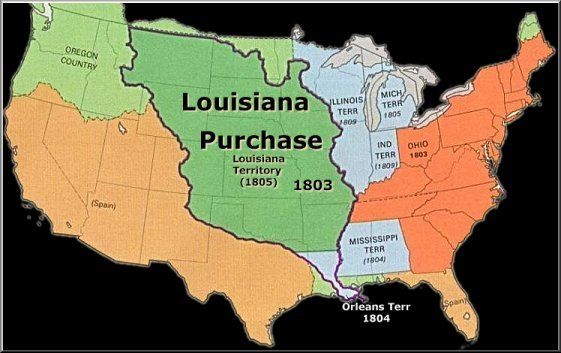
Here is the part of the story that belongs in every American history class and almost never appears in one. Napoleon’s defeat in Haiti broke his ambition for a French empire in the Americas. The Louisiana territory was supposed to be the breadbasket that fed his Caribbean sugar colonies — grain, timber, and supplies flowing south to Saint-Domingue. Without Saint-Domingue, Louisiana no longer served his plan, and France, drained by the war in the Caribbean and facing renewed war with Britain, needed cash more than it needed a foothold on a continent it could no longer defend.
In 1803, Napoleon sold the entire Louisiana Territory to the young United States for roughly $15 million — 828,000 square miles, doubling the size of the country overnight. I want to be precise here, because precision is what makes this story unshakeable rather than easy to dismiss: that territory was not the original thirteen states. Those were the British colonies, formed decades earlier, an entirely separate history. What the Louisiana Purchase became was all or part of fifteen future states — Louisiana, Missouri, Arkansas, Iowa, and others that followed. But getting that detail right doesn’t shrink the point. It sharpens it. Haiti’s victory is a direct, well-documented link in the chain of events that gave the United States the Louisiana Territory — and Haiti has never gotten so much as a footnote of credit for it in the story America tells about itself.
FREEDOM, THEN A BILL FOR 122 YEARS
And how did the world thank Haiti for winning? In 1825, French warships anchored off the Haitian coast carrying an ultimatum: pay 150 million gold francs — roughly ten times what the United States had just paid France for the entire Louisiana Territory — or face invasion. This was not a loan for roads or schools. It was compensation demanded on behalf of French slaveholders for the human beings they had lost when Haiti’s people freed themselves.
Read that again. The formerly enslaved were forced to pay their former enslavers for the crime of walking free. Haiti had no way to raise that kind of money except by borrowing it — from French banks, at interest — and a debt that was supposed to purchase Haiti’s recognition instead became a financial chokehold that did not fully release until 1947. That is one hundred twenty-two years — roughly six generations — of a nation servicing a debt for the audacity of winning its own freedom.
WHY THIS BELONGS IN THE FINANCIAL LITERACY CONVERSATION
I have spent my life studying wealth — how it is built, how it is protected, and how it is quietly stolen, sometimes through a treaty nobody outside the country ever reads. Financial literacy is the new civil rights issue of this generation, and Haiti is Exhibit A for why that is true. This is also why I have authored 7 books, including my latest bestselling book, ‘Capitalism for All.’ This was not a story of a poor country that stayed poor because its people failed to understand money. That didn’t help, but the back story is vital to understanding their current condition.
This was a nation of people who understood freedom well enough to defeat one of the most powerful armies of their era, in the world — and who then had that freedom monetized against them for over a century. You cannot separate Haiti’s modern economic struggles from that ledger. A country does not absorb 122 years of debt service extracted from its treasury and simply recover because a few decades pass. Extraction compounds across generations the same way wealth compounds — just in the opposite direction.
I often talk about the role of the economic plumber — someone who goes in and fixes the pipes so opportunity can actually flow to people, instead of leaking out before it ever reaches them. Haiti’s pipes were not neglected. They were deliberately clogged, by treaty and by gunboat, for the better part of a century and a quarter. We cannot build more bridges, and fewer toll bridges, in the global economy if we are unwilling to look honestly at where some of the toll booths came from in the first place.
CLOSING
I am not writing this to relitigate 1825. I am writing it because we die for lack of knowledge, and this is knowledge that everyone building a theory of how wealth gets made — and unmade — in this world needs to have. Haiti gave the world proof that free people would rather fight than stay enslaved. America got a continent out of the bargain. Haiti got a bill, and no operating manual for the proper running of a nation. It is long past time more of us understood the difference.
Let’s go.
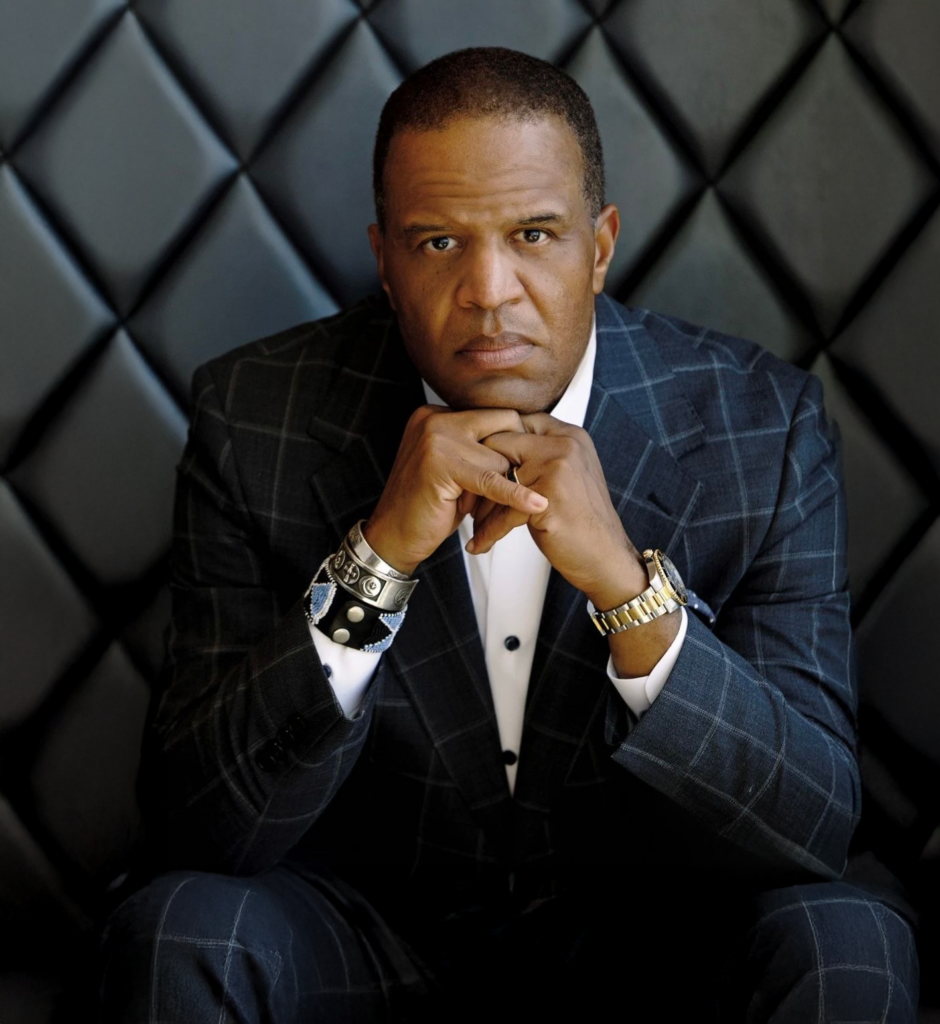
John Hope Bryant
John Hope Bryant — founder of Bryant Group Ventures, Operation HOPE, Inc, publisher of the Bryant Journal and author of his 7th book Capitalism for All: Inclusive Economics and the Future Proofing of America, now a bestseller. Bryant was recently recognized as a member of the Forbes 250 Greatest Living Self Made Americans, on the occasion of the 250th anniversary of America itself. Get the book →
#FinancialLiteracy #CapitalismForAll #EconomicEmpowerment #OperationHOPE #BryantJournal #HaitianHistory #SilverRightsMovement