A Bryant Journal Foundational piece
If I handed a homeless man a million dollars today, I would bet against him having it in six months. If I handed a rich man with no knowledge in his head the same amount, I would bet against him keeping it for a generation. An old English proverb got there before I did: a fool and his money are soon parted.
I start there because most people think wealth is a number. It isn’t. Money is just the paper trail wealth leaves behind, after the real work is already done.
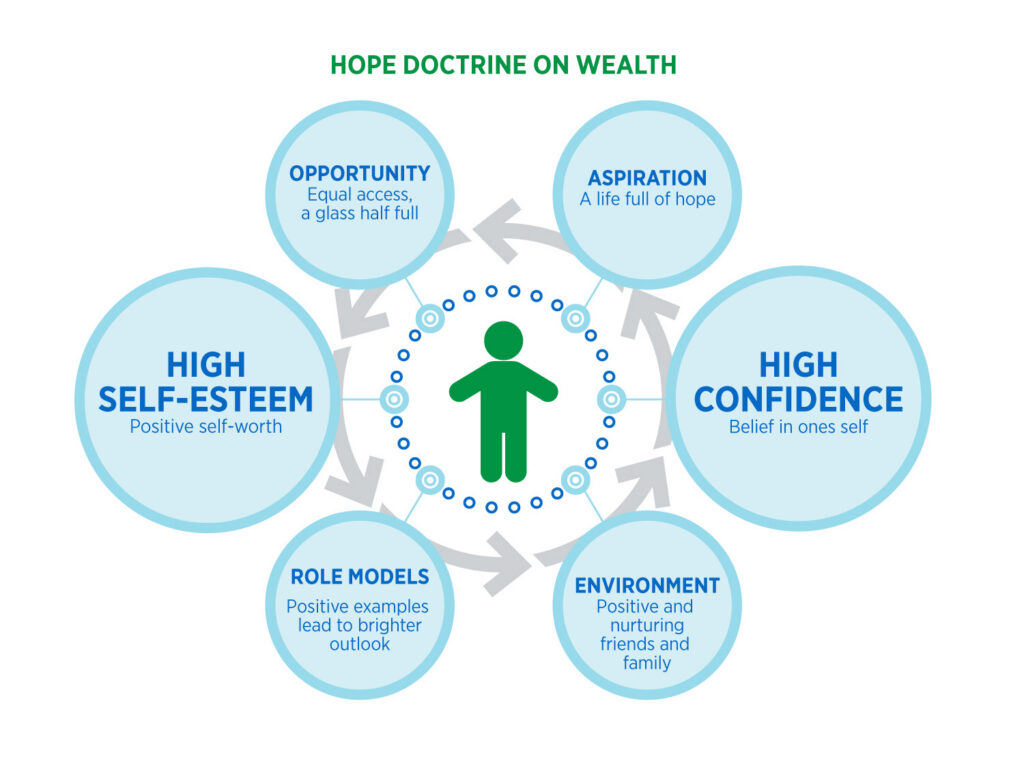
Years ago, I wrote the HOPE Doctrine on Poverty, which defines poverty as three things — a poverty of confidence, a poverty of environment, and a poverty of opportunity — none of which show up on a government income chart. What I want to lay out here is the mirror image of that doctrine: the HOPE Doctrine on Wealth. It turns out the wealthy are built out of the exact same three ingredients as the poor. They just have them, instead of lacking them.
The first fifty percent is confidence and self-esteem.
Every wealthy person I have ever met, regardless of how they made their money, wakes up in the morning believing they can. Not arrogance. Not ego. Just a settled, quiet belief that they are capable of building something. I grew up in Compton and South Central Los Angeles, around people who were doers and owners — people who told me they loved me on a regular basis. I am not a rocket scientist. I benefited from the asset of my environment, and I built my confidence the same way anyone does: by being around people who modeled it for me. The greatest accomplishment of my life was reaching a point where I became reasonably comfortable in my own skin. I believe that should be everyone’s goal, because it is the actual foundation everything else gets built on.
There is a difference between being broke and being poor. Being broke is a temporary, economic situation, but being poor — is a disabling frame of mind, and a depressed condition of our spirit, and we must vow to never, ever be poor again….
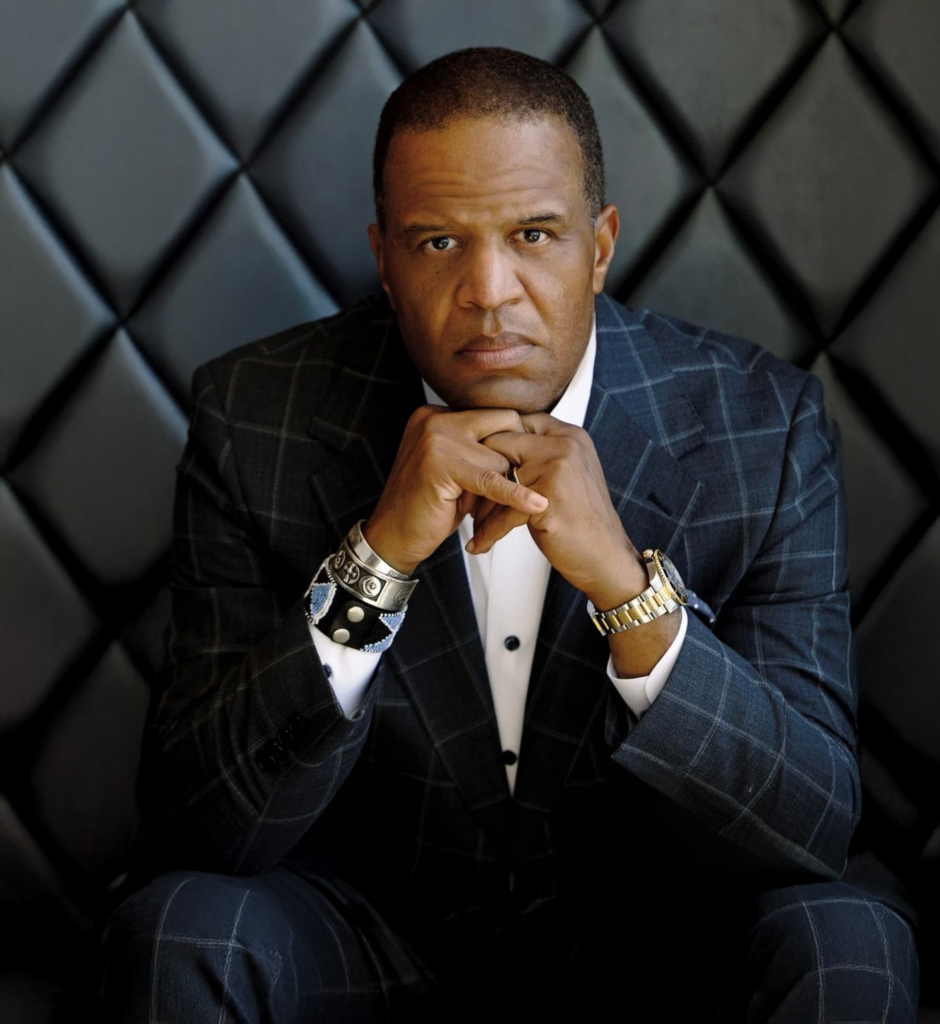
John Hope Bryant, founder of Operation HOPE
The second twenty-five percent is role models and environment.
You are the average of what surrounds you, whether you notice it or not. If you hang around nine broke people, you’ll likely be the tenth. If you grow up around nine nuclear scientists, you will likely be the tenth of those too. The wealthy, almost without exception, either had this environment handed to them by family or built it deliberately by seeking it out. Henry Ford put it as well as anyone ever has: whether you think you can or think you can’t, you’re right. Mind-set matters, and mind-set is contagious.
The final twenty-five percent is aspiration — which is just another word for hope.
This is the piece that actually separates people, more than any other. The wealthy see opportunity everywhere. I made a video years ago called Modern Slavery, showing what I call the Invisible Class driving through a struggling neighborhood — a check casher next to a payday lender next to a rent-to-own store next to a liquor store — normalized, unquestioned, robbing people in broad daylight in plain sight. Now picture a person with a wealthy mind-set driving through that same neighborhood. They don’t see blight. They see a run-down house worth buying, fixing, and renting to a family who needs a decent place to live. Same street. Same houses. Two completely different economies, depending entirely on which pair of eyes is looking.
Whether you believe that you can, or believe that you can’t, you’re right.
I want to be precise about the word capital, because I use it constantly and I mean something specific by it. Capital comes from the Latin capita — knowledge in the head. At its root, capital has nothing to do with money, and neither does real, sustainable wealth. My own wealth, such as it is, came from my embrace of the free enterprise system, an opportunity mind-set, relationship capital I built with people who believed in me before I had anything to offer them, entrepreneurial hustle, and an unwavering belief in myself that I’d call spiritual capital. None of that showed up in a bank statement first. All of it showed up in a bank statement eventually.
So here is the honest question underneath all of this: if the wealthy and the poor are built out of the same three ingredients, just in opposite proportions, what’s the actual difference between them? It is not talent. I have met brilliant people who are homeless, and I have met fools with money. The difference is access — to the environment, the role models, and the belief systems that make confidence and aspiration possible in the first place.
That is the whole case for everything I have built since. You cannot legislate someone into having self-esteem. You cannot hand someone an aspiration. But you can absolutely build systems that put people in rooms with better role models, that teach financial literacy before cynicism sets in, that show a struggling neighborhood what a wealthy mind-set would see when it drives down that same street. That is not charity. That is architecture.
The HOPE Doctrine on Poverty tells you what’s broken. The HOPE Doctrine on Wealth tells you what to build in its place. Confidence. Environment. Aspiration. Get those three right, and the money has a way of following. This mindset shift, is what all of my seven books are about, but more so my latest national bestseller, ‘Capitalism for All.’
Pick one door. Walk through it. Then hold it open for the next person.
John Hope Bryant — founder of Bryant Group Ventures, Operation HOPE, Inc, publisher of the Bryant Journal and author of his 7th book Capitalism for All: Inclusive Economics and the Future Proofing of America, now a bestseller. Bryant was recently recognized as a member of the Forbes 250 Greatest Living Self Made Americans, on the occasion of the 250th anniversary of America itself. Get the book →