A Bryant Journal Foundational piece
In March of 1865, Abraham Lincoln signed a bill establishing the Freedman’s Bureau, and inside it, something I consider one of the most quietly radical acts in American economic history: the Freedman’s Bank. Frederick Douglass, one of my heroes, the most photographed human and the ‘Dr. Martin Luther King, Jr. of that day,’ helped lead it. Its purpose was simple and enormous — teach four million people who had, the day before, been legally classified as property, how money actually works. How to save it. How to build with it. How to keep it.
I have said before that I consider this one of the most progressive economic acts in American history, measured against the moment it happened in. I still believe that.
It did not last. Lincoln was assassinated a month later. Mismanagement and fraud crept into the bank’s later years, and in 1874 it collapsed, taking the savings of tens of thousands of depositors down with it — people who had trusted, for the first time in their lives, that a financial institution existed to serve them rather than extract from them. That trust did not come back easily. In some communities, it still hasn’t fully come back.
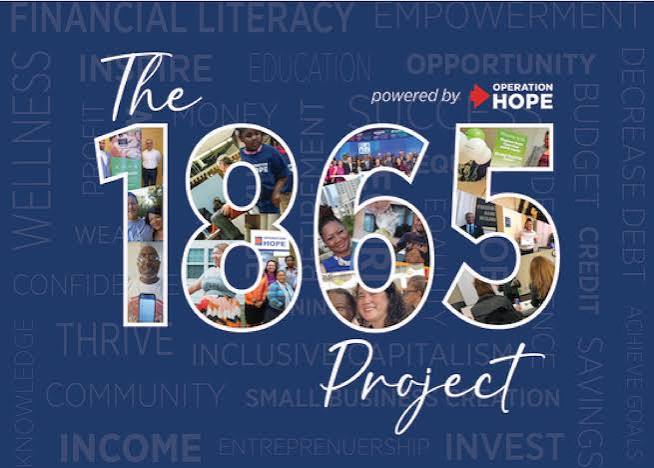
I named The 1865 Project after that year on purpose. Not to memorialize a failure, but to name an unfinished job and finish it.
Here is what I mean by unfinished. Lincoln and Douglass understood something that still isn’t fully absorbed into how this country talks about economic inclusion: freedom without financial literacy is an incomplete freedom. You can grant someone their legal rights and still leave them without the tools to actually build a life with them. That gap — between the right to participate in the economy and the knowledge of how to actually do it — is the same gap I’ve spent more than three decades of my life trying to close through Operation HOPE. The 1865 Project is where I made that mission explicit, gave it a name, and asked the country to finish what got interrupted a century and a half ago.
In 2016, the U.S. Treasury renamed its Treasury Annex Building — the original headquarters of the Freedman’s Bank — to the Freedman’s Bank Building. I asked for that renaming, and Secretary Jack Lew and Wally Adeyemo made it happen. It is a small thing, a name on a building, and it is also not a small thing at all. It’s a marker that says: we remember what this was supposed to be, and we’re not done with it.
The 1865 Project is how Operation HOPE is finishing it. In practice, that means expanded financial literacy programs for children, teenagers, and young adults, so no one has to reach adulthood the way earlier generations did — locked out of knowledge that should have been theirs from the start. It means financial coaching in languages beyond English, because economic exclusion has never respected a single language or a single community. It means building the technology to reach people in places our physical offices can’t, and doing the research to understand what communities actually need rather than assuming we already know.
None of this is charity, and I want to be precise about that, because the word gets misapplied to this kind of work constantly. Since 1992, Operation HOPE has served more than four million people and directed more than four billion dollars of economic activity into communities that had been written off by conventional finance. Every service we provide is free to the client. But free to the client is not the same as small in scale, and it is definitely not the same as charity — it is infrastructure, the same way a road or a power grid is infrastructure. You don’t call the interstate highway system a form of charity. I don’t think of financial literacy any differently.
The results are not abstract. The average person who comes through our doors sees their credit score rise by roughly 41 points. Median debt goes down by close to $1,900. Median savings goes up by over $1,100. We’ve helped secure $1.3 billion in mortgage loans for nearly 9,000 first-time homebuyers. And through our 1 Million Black Businesses initiative alone, we’ve helped create, serve, or scale more than 450,000 Black-owned businesses since 2020. Those are not the numbers of a program. Those are the numbers of an unfinished institution finally getting finished, one credit score and one small business at a time.
Some of the country’s largest companies and institutions have joined this effort as members of The 1865 Project — banks, technology companies, foundations — not because it is fashionable, but because they understand the same arithmetic I laid out in the Third Way: you cannot have a thriving economy if a third of the country is standing outside it looking in.
Lincoln and Douglass started something they didn’t get to finish. I don’t say that as a criticism of them. I say it because someone has to finish what got started, and I have never been able to walk past unfinished business without feeling obligated to pick it up.
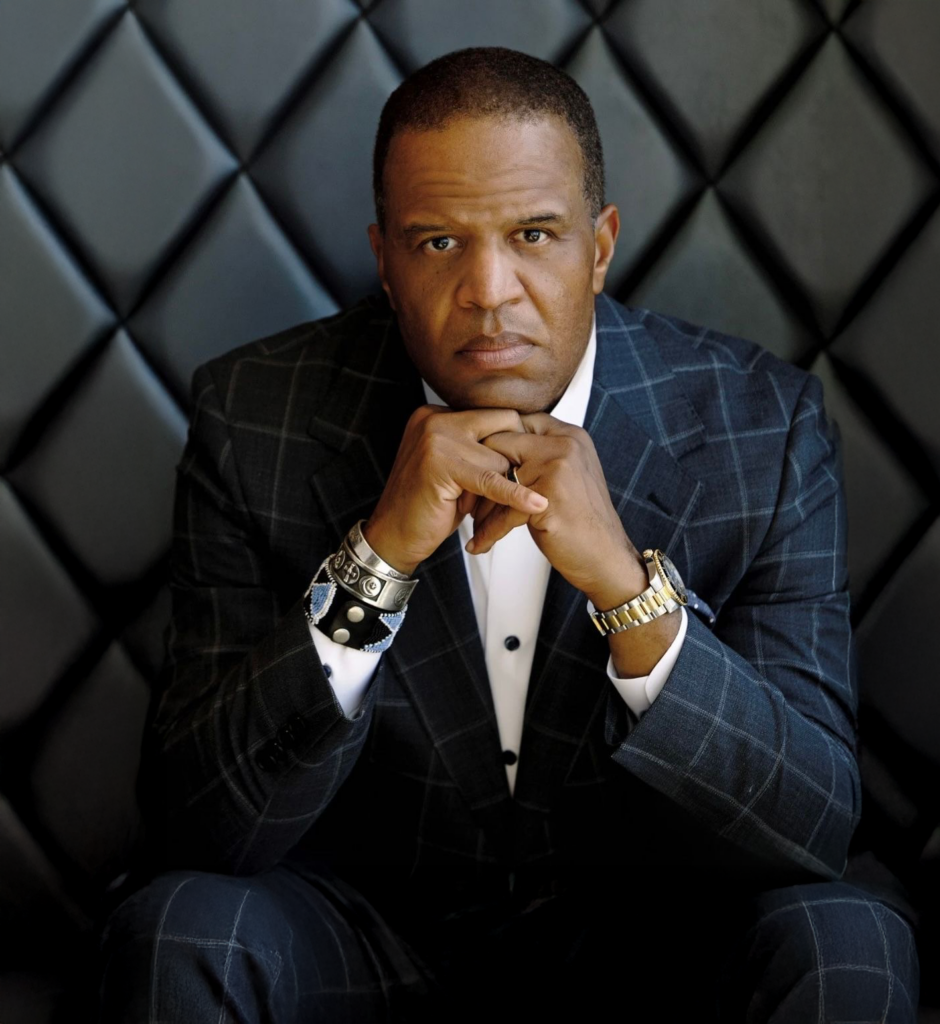
Pick one door. Walk through it. Then hold it open for the next person.
John Hope Bryant — founder of Bryant Group Ventures, Operation HOPE, Inc, publisher of the Bryant Journal and author of his 7th book Capitalism for All: Inclusive Economics and the Future Proofing of America, now a bestseller. Bryant was recently recognized as a member of the Forbes 250 Greatest Living Self Made Americans, on the occasion of the 250th anniversary of America itself. Get the book →