MONEY & WEALTH · SEASON 3 · EPISODE COMPANION
What Kansas City Fed President Jeff Schmid taught me about money, trust, and the American Dream — in the 250th year of our nation
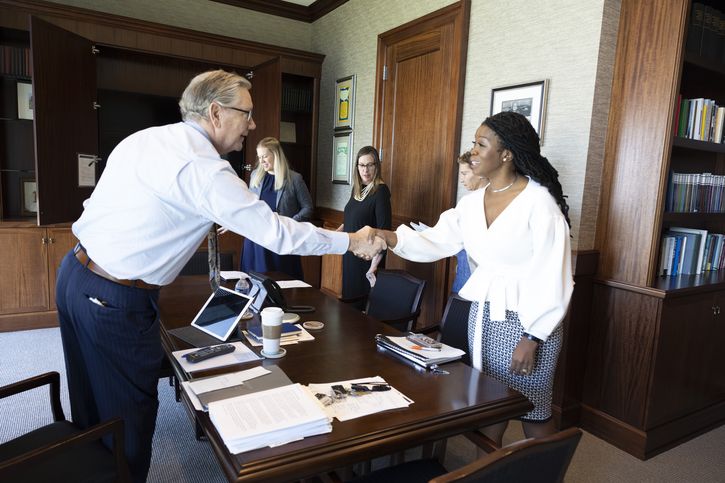
John Hope Bryant and Federal Reserve Bank of Kansas City President Jeff Schmid, Money & Wealth podcast taping
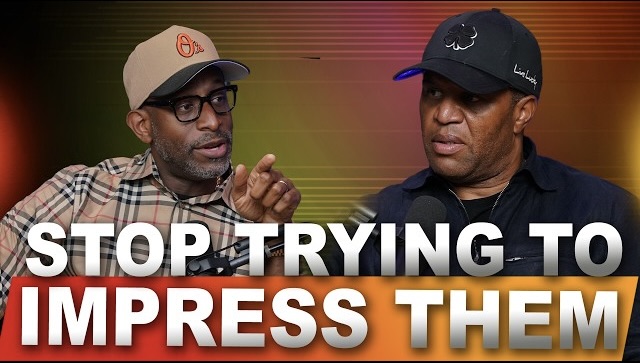
I have interviewed United States senators. I have sat with governors. I have spoken with members of a presidential cabinet across nine administrations, and with vice presidents and presidents themselves. Every one of those conversations, I will tell you honestly, was easier to arrange than the one I am about to share with you.
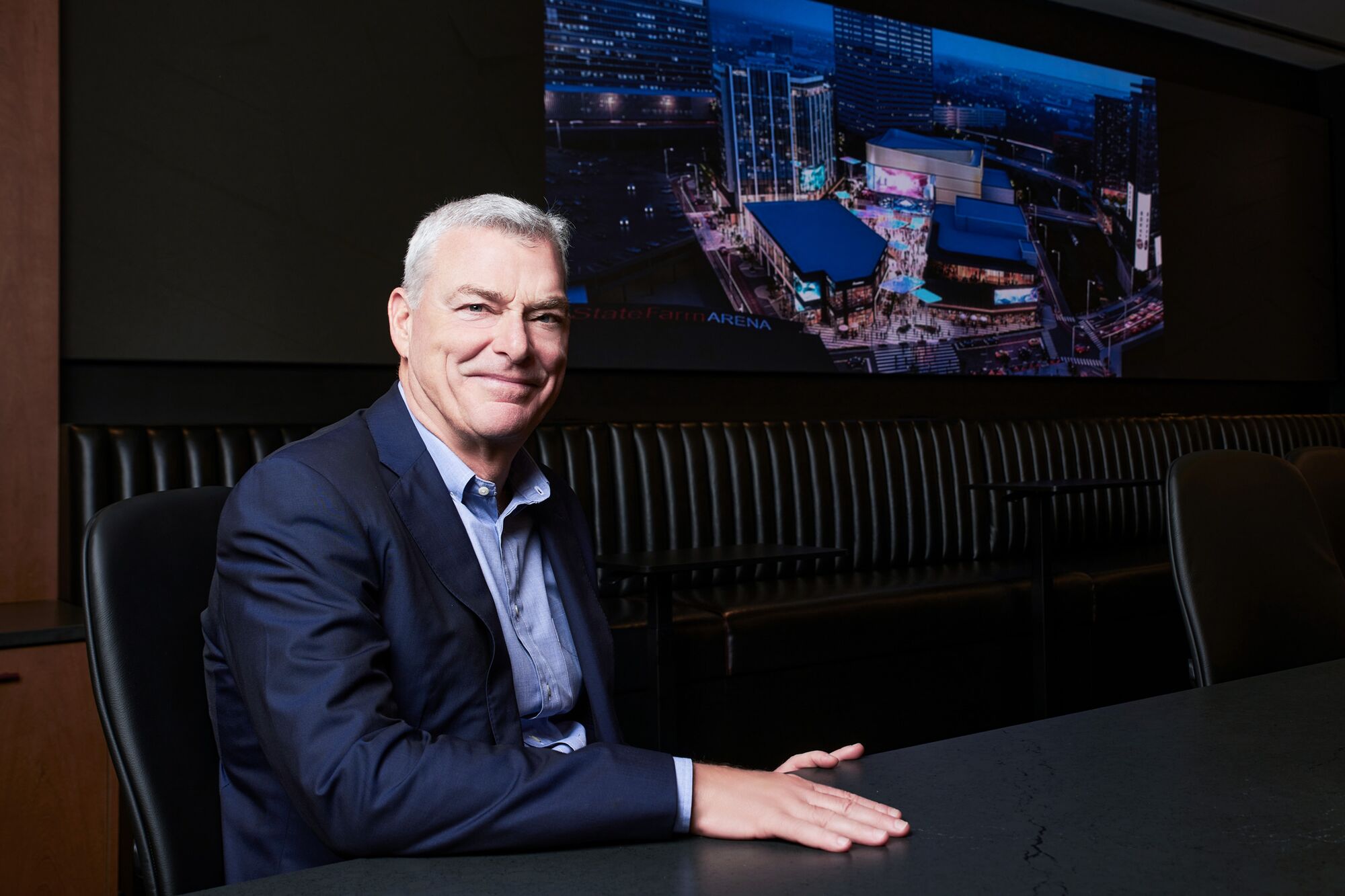
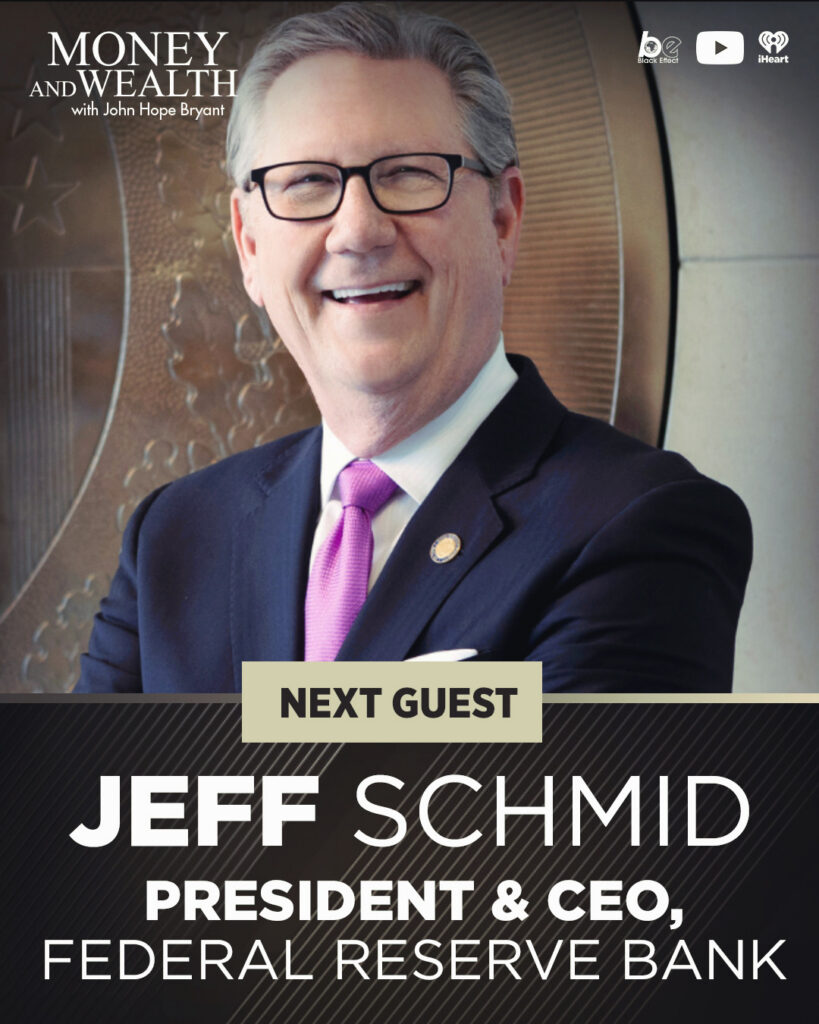
Getting a sitting member of the Federal Reserve System to sit down, on the record, and simply explain how the American financial system actually works is one of the hardest bookings in media. So when Jeff Schmid, President and CEO of the Federal Reserve Bank of Kansas City, agreed to join me for this season’s most important episode of Money & Wealth, I understood exactly what was being entrusted to us — and I intend to honor it.
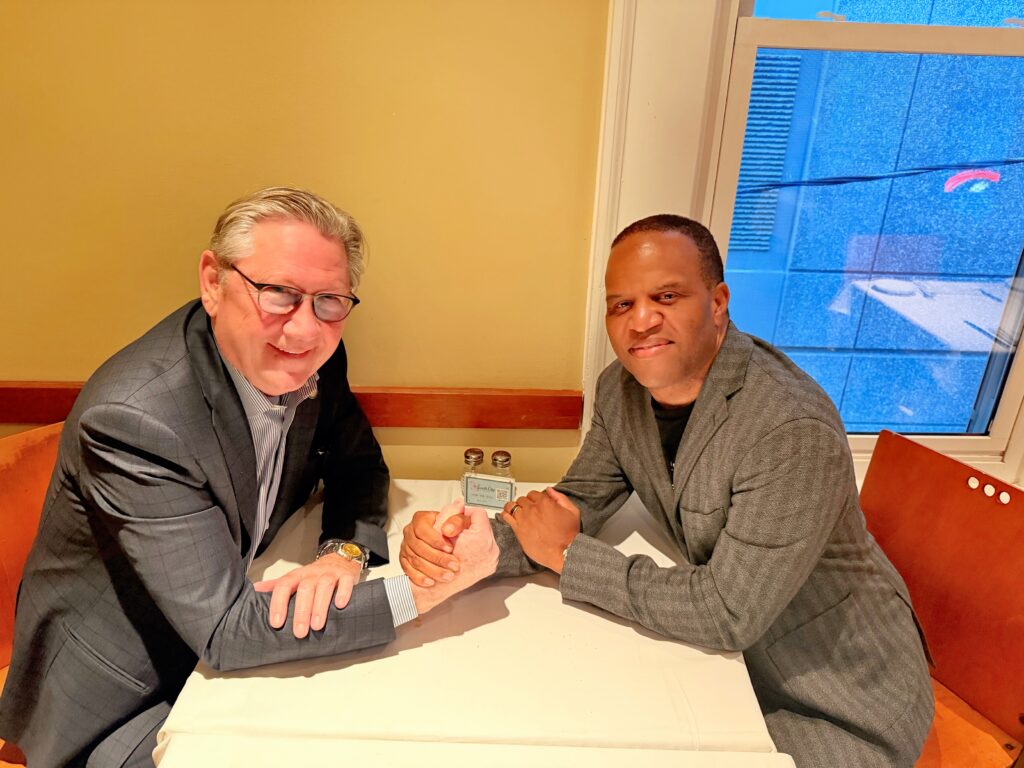
Jeff and I go back almost twenty years, to Omaha, when he was helping build a bank and I was building Operation HOPE, Inc. He has served on our Board of Advisors, full disclosure, which is one of the reasons he made clear he was speaking to me in his personal capacity that day, and not as a spokesman for the Federal Reserve itself. What he gave us instead was something rarer: a plainspoken walk through the plumbing of American money, from a man who has spent more than forty years inside it.
THE FED, DECODED
Most Americans, President Schmid told me, live inside a financial system they were never taught to understand — and fear grows in that gap. So we started at the beginning: what the Federal Reserve actually is. Not Wall Street. Not privately owned. A quasi-public institution created by Congress in 1913, organized into twelve regional Reserve Banks after two earlier attempts at a national bank failed to survive their charters. Kansas City is the tenth of those twelve, covering seven states across the Midwest, with branch offices in Omaha, Denver, and Oklahoma City.
President Schmid offered the clearest image of monetary policy I have heard in three seasons of this podcast. Picture a train, he said. Fiscal policy — the executive and legislative branches — sits in the engine, stoking the fire, wanting the economy to grow as fast as possible. The American people ride in the cars behind. The Federal Reserve is neither the engine nor the cars. It is the rails.
“The two rails are inflation and employment. If your rails are uneven and the train is going too fast, there’s risk of derailment.”
— Jeff Schmid, President, Federal Reserve Bank of Kansas City
That is the dual mandate in a sentence: keep inflation near two percent, keep the country close to full employment. Everything the Fed does with interest rates and its balance sheet — which currently stands in the trillions, a majority of it in U.S. Treasuries and mortgage-backed securities — is aimed at keeping those two rails level.
WHY YOUR RATE ISN’T THE FED’S RATE
Here is the financial literacy moment I most want you to sit with. The Federal Reserve sets a benchmark rate. It does not set what you personally pay for a car note or a credit card. President Schmid confirmed what I have said for years: if the Fed’s rate is in the low single digits and you are being charged double digits, something else is happening — your credit score, the competition for capital in your neighborhood, or, too often, a predator who is betting you don’t know the difference.
His advice was direct: if you are carrying double-digit rates on credit while your score is strong, go find a banker or a credit coach — Operation HOPE, Inc. runs coaches for exactly this purpose — and get the true cost of your credit down into the single digits. That gap between what the system charges you and what it should charge you is, in my view, the modern civil rights issue. It is why I call financial literacy the Silver Rights movement of our generation.
A WARNING ON AI AND FRAUD
We also used this platform for something urgent: fraud. Scammers are impersonating public figures, banks, even the Federal Reserve itself, over text and email. President Schmid was unambiguous — the Federal Reserve does not text you asking for money, and neither do I. His guidance for families: before you transfer money to anyone, verify them through a channel they cannot fake, such as a code word only you and a loved one would know.
He connected this directly to the acceleration of artificial intelligence, noting that voice cloning and deepfakes will make impersonation far harder to detect. It confirmed for me, again, why Operation HOPE, Inc.’s AI Moonshot work, alongside partners like Van Jones, has to spend as much energy protecting people from AI-enabled fraud as it does opening doors to AI-enabled opportunity.
FREEDMAN’S BANK AND THE REASON HE SAID YES
Toward the close, I asked President Schmid the question I most wanted answered: why does the history of the Freedman’s Bank — the institution chartered after the Civil War to teach formerly enslaved Americans about money, and later renamed in its honor at Operation HOPE, Inc.’s urging under President Obama and Treasury Secretary Jack Lew — matter so much to him personally?
His answer stayed with me. He credited our friendship with leading him to study Frederick Douglass in depth, and through that journey, to a closer relationship with Ambassador Andrew Young. He told me that if he could commission a statue for Lafayette Park outside the Freedman’s Bank annex in Washington, it would be Douglass with an arm around Ambassador Young, looking toward the bank itself. That is not the kind of thing a central banker says for the cameras. He said it in a quiet moment, off the cuff, weeks before this taping — and it is why I invited him to share a stage with me in Texas in front of his own banking peers.
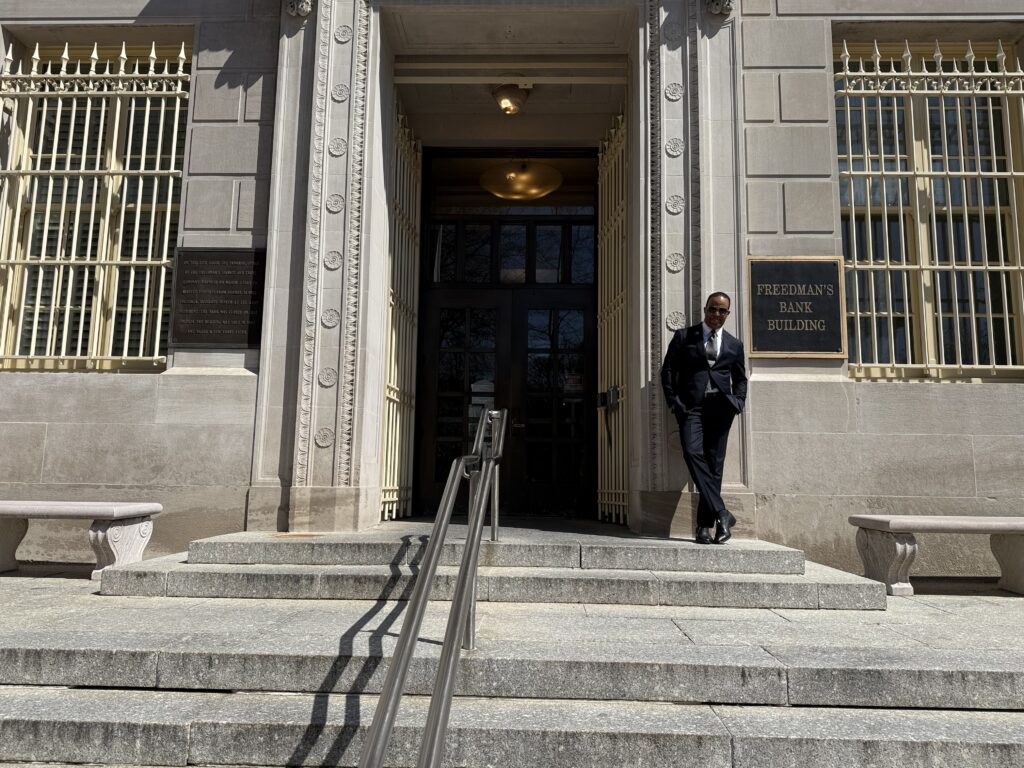
Freedman’s Bank Building, Washington, D.C. — referenced in the conversation’s closing segment
WHY NOW
This conversation landed at a remarkable moment: weeks from America’s 250th birthday, and in the 100th anniversary year of Black History Month. Most Americans, in my experience, assume a man like Jeff Schmid — a career banker from Nebraska who now helps set the course of the world’s largest economy — has nothing in common with the communities I’ve spent my life serving. We make that assumption in every direction: Black to white, white to Black, rich to poor, poor to rich, one political party to the other.
“Build more bridges, and less toll bridges. Let’s find our way back to each other.”
— John Hope Bryant
I have said it before and I will say it again here: we die for lack of knowledge. Go find your regional Federal Reserve Bank. Take a tour. Ask who sits on its board of directors. Be nosy. Be curious. The system is not a secret society — it is your system, and understanding it is one more tool in building the kind of life you and your family deserve.
My gratitude to President Jeff Schmid, to his team at the Federal Reserve Bank of Kansas City for trusting us with this conversation, and to every listener who has helped make Money & Wealth one of the most-heard business podcasts in the country. This is the episode I’ve told our team to make required listening. Take notes. Then listen again.
Let’s go.
#FinancialLiteracy #CapitalismForAll #EconomicEmpowerment #OperationHOPE #BryantJournal #MoneyAndWealth #FederalReserve
John Hope Bryant — founder of Bryant Group Ventures, Operation HOPE, Inc, publisher of the Bryant Journal and author of his 7th book Capitalism for All: Inclusive Economics and the Future Proofing of America, now a bestseller. Bryant was recently named a member of the Forbes 250.