A Bryant Journal Foundational piece
Two young people graduate in the same month. One walks across the stage at Harvard, degree in hand, surrounded by classmates whose parents run companies, foundations, law firms, sometimes entire countries. The other walks across the stage at the local community college, proud to be the first in their family to finish higher education.
Both are smart. Both have drive. Both can genuinely change the world.
Here is the uncomfortable truth I’ve spent years sitting with. Harvard will not make its students ten times smarter than the community college graduates. It may make them ten times wealthier over the course of a lifetime. Not because of what’s taught in the classroom. Because when that Harvard graduate calls a classmate years later with a business idea, a hiring request, a problem that needs solving, there is a good chance someone in that network can help — and will.
That help is not luck. It is relationship capital: the invisible web of trust, reciprocity, and access that opens doors, smooths rough patches, and connects ideas to opportunity. I call it the currency with the highest compounding rate of any I know of, and I don’t say that lightly, coming from someone who has spent his life talking about credit scores and bank accounts.
We like to tell ourselves America is a fully open playing field, the world’s best working example of meritocracy. Compared to most places across most of human history, it genuinely is. But there’s a quieter truth we don’t say out loud often enough: there is an informal caste system running underneath this country. Nobody wrote it into law. No police officer enforces it. It’s enforced by something harder to see and harder to fight — social patterning, the simple tendency for people to stay in their economic lane for life.
In most families, one or two people break through to a higher lane. An athlete with a big contract. A musician who makes it. A relative who starts a business that actually takes off. But without guidance, without financial literacy, and without a network of peers already playing the game at that higher level, even these breakout successes often fade back down. Sometimes the family culture itself pulls them back — if it’s built on dependency rather than mutual advancement, the person who broke through can feel obligated to subsidize everyone else’s lifestyle indefinitely, until the breakout moment becomes a slow slide back to where they started.
I believe the next generation needs three forms of capital to actually break that cycle, not two. Financial literacy — understanding how money works and how to make it work for you. AI literacy — understanding the tools that will shape this century’s economy. And relationships — knowing the people and building the trust that opens doors you cannot force your way through. Without the third, the first two are much harder to scale. You can have every skill and every resource in the world, and if you never get the meeting, the introduction, the seat at the table, the ladder simply stops short.
If you hang around nine broke people, you will likely be the tenth. That’s not a knock on people who are struggling. It’s a reminder that proximity to power is itself a form of power, and you cannot consistently think bigger or push harder if the circle around you never asks you to.
I want to be precise about what building relationship capital actually means, because it isn’t about abandoning where you came from. It’s about extending your branches while your roots stay exactly where they are. Keep your deepest ties to your community. And also build new ties to people and institutions that can accelerate where you’re going. From alumni networks to business associations to the kind of private clubs people love to be suspicious of — these are all, at their core, systems for lifting each other over decades. A graduating class that keeps helping each other for twenty-five or thirty years is compounding trust the same way money compounds interest.
The first relationship in this whole chain, before any of the others, is the one you have with yourself. This is why the most important commitment I ever made in my own career was to become reasonably comfortable in my own skin. Do you keep your promises to yourself? Do you show up for what matters to you, even when nobody’s watching? That’s not a soft question. It’s the actual foundation everything else gets built on, because a credit score is really just a mathematical way of measuring whether a stranger would extend you the same trust a friend already does.
Some countries have gotten this right at a systemic level, and it’s worth studying why. The GI Bill after World War II integrated millions of veterans into new industries, creating cross-class relationships that fueled the golden age of the American middle class. Singapore built a meritocratic culture where mentorship and state-supported leadership pipelines bring talent from every background into its highest levels of government and business. The Nordic countries pair strong public institutions with tight professional circles, so opportunity networks stay genuinely accessible rather than gatekept. On the other side, rigid caste societies, where who you know is limited entirely by who your grandparents knew, watch their own talent stall out generation after generation. Closed trust networks leave whole pools of innovation sitting untapped, permanently.
America has been the best global example of an open relationship-capital economy for most of its history. The most diverse culture on Earth. The largest economy. The last remaining superpower. But there’s a real question sitting over the next fifty to a hundred years: can we keep updating our own cultural software to keep winning, or will we let the door close on opportunity for people outside the existing circles, and lose the very advantage that made us who we are in the first place?
Relationship capital is not a luxury. It is the currency that sustains success across generations, and it only works if people actively choose to build ladders instead of just climbing the ones they were handed. Create one internship a year for someone outside your lane. Start a financial literacy club in your school, your church, your neighborhood. Mentor one person who wouldn’t otherwise have access to you. Pick one. Commit to it. Watch what it does over time. That’s ‘Capitalism for All’ at scale and in your community.
A ladder doesn’t rebuild itself.
Pick one door. Walk through it. Then hold it open for the next person.
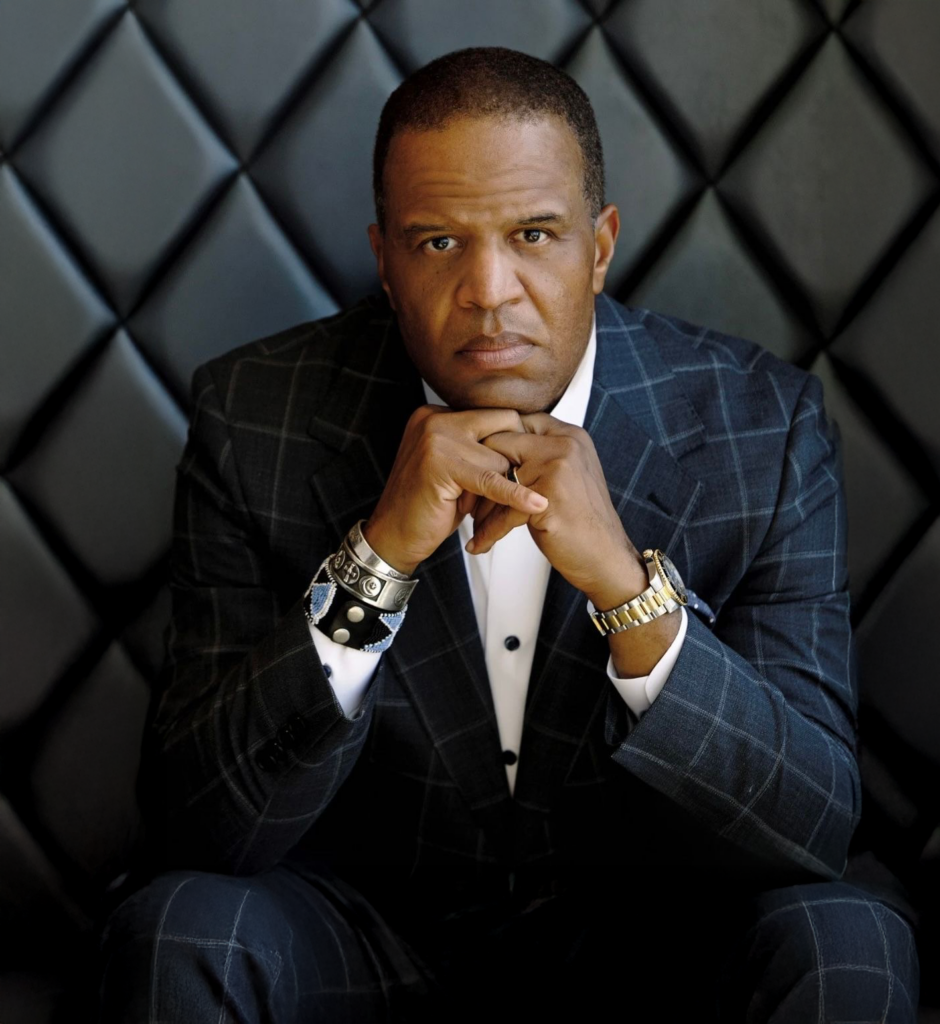
John Hope Bryant — founder of Bryant Group Ventures, Operation HOPE, Inc, publisher of the Bryant Journal and author of his 7th book Capitalism for All: Inclusive Economics and the Future Proofing of America, now a bestseller. Bryant was recently recognized as a member of the Forbes 250 Greatest Living Self Made Americans, on the occasion of the 250th anniversary of America itself. Get the book →