A Bryant Journal Foundational piece
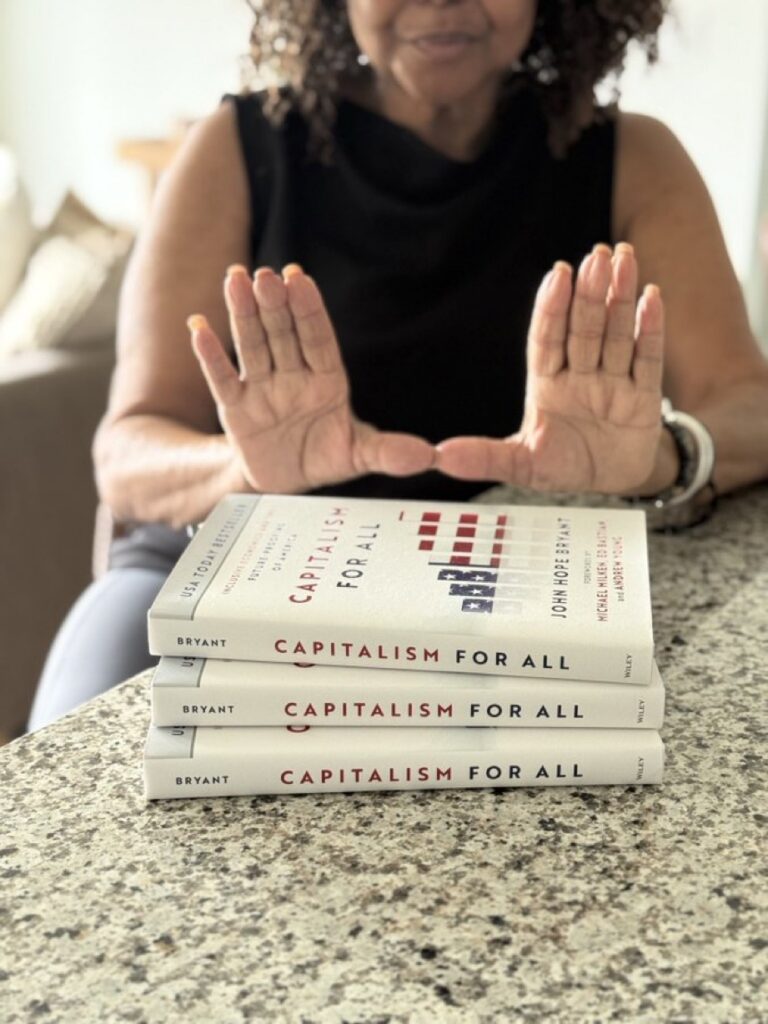
Every book I’ve written has been an argument. This one is the argument — the one all the others were building toward, whether I knew it at the time or not.
I wrote Capitalism for All because I believe America is standing at a decision point it has faced only twice before, and I believe most people have not yet clocked how high the stakes actually are. The case is moral, and it is math. So I built the book to make both cases at once, and I built this page to be the front door to all of it — one place that walks through the whole argument and points you toward the deeper piece on each idea, for whenever you want to go further than a summary can take you.
Here is the case, in full.
The decision point.
This is not the first time America has had to decide who actually gets to belong to it — not on paper, but in practice, in bank accounts and property deeds and who gets a seat at the table where decisions get made. I call these moments the three Reconstructions. The First came after the Civil War and gave us freedom, then got rolled back before it finished. The Second was the Civil Rights Movement, and it gave us rights, then lost momentum before the economic half of the fight was won. I believe we are living through the Third right now — the years between 2025 and 2035 — and its subject is neither freedom nor rights. Its subject is results. I’ve laid out the full history of all three, with the real dates and the real unfinished business each one left behind, in a dedicated piece.
Read: The Third Reconstruction →
The philosophical frame underneath all of it is what I call the Third Way — not a compromise between left and right, but a different question entirely. Not how much government or how much market, but whether everyone actually has access to the tools: financial literacy, capital, a credit score you understand and can build, ownership of something that compounds. I unpack the full argument, aphorism by aphorism, in a dedicated piece.
Read: The Third Way and the Third Reconstruction →
Part I: The case for Capitalism for All.
The book opens by naming what’s actually broken. Not capitalism itself — capitalism is a terrible system, except for every other one — but a capitalism built with the door only half open. I walk through what I call the fragile ladder of opportunity, why the middle class is America’s actual superpower and not a side effect of growth, and what has historically made American exceptionalism real rather than rhetorical. Underneath all three chapters sits the same diagnosis I first laid out years ago in the HOPE Doctrine on Poverty: that real poverty is a poverty of confidence, environment, and opportunity, not just income. I’ve given that doctrine, and its mirror image, the HOPE Doctrine on Wealth, each their own full treatment.
Read: The HOPE Doctrine on Poverty →
Read: The HOPE Doctrine on Wealth →
Part II: Making Capitalism for All a reality.
This is the how. Rebuilding the ladder of opportunity. Technology as the new economic divide — and AI specifically as either the widest divide America has ever built or the fastest path across it, depending entirely on who has access to it first. This is where our AILP³ initiative lives in practice, and where I make the case that energy, climate, and the jobs of the future are not separate conversations from economic inclusion, but the same conversation. A dedicated piece on AILP³ is coming to this page.
Part III: Business plans for America.
This is the part of the book I think gets underestimated the most, because “business plan” sounds smaller than what it actually is. I wrote seven of them — for Black America, for women, for rural America, for Latino America, for Asian America, for Native America, and for Africa — because I don’t believe in one-size-fits-all solutions to problems that have different histories and different starting points. Together, they are what I mean when I talk about a Business Plan for America: not a slogan, an actual set of plans, sector by sector, community by community. A dedicated piece on the full Business Plan for America is coming to this page.
Part IV: The path forward.
The book closes on narrative, on the global dimension of inclusive economics, and on what I call the leadership imperative — because none of the first three parts happen without people willing to lead it, in boardrooms and city halls and kitchens alike. This is also where relationship capital does its heaviest lifting: the idea that who you know, and who believes in you before you’ve proven anything, is itself a form of wealth that compounds like any other. I’ve given it its own full piece as well.
The through-line.
If there’s one thread running under all eighteen chapters, it’s this: civil rights opened the doors, and what I call the Silver Rights Movement is about what happens once you’re standing inside the room. I trace that movement back to Montgomery, to Andrew Young’s quiet negotiations in back rooms while marches happened in the streets, all the way forward to today, in its own piece.
Read: The Silver Rights Movement →
There’s also unfinished business from an even older institution — the Freedman’s Bank, founded in 1865 to serve people who’d been locked out of wealth-building for 246 years, and dismantled less than a decade later. I consider finishing that institution’s original mission one of the central obligations of this Reconstruction, and I’ve given that history its own full piece as well.
Why now.
If we get the economic side of this equation right, America leads for another 250 years. If we get it wrong, we’ll be remembered as the nation that had it all and gave it away. I don’t say that as a slogan. I say it as the actual bet this book ‘Capitalism for All’ is making.
This page will keep growing as each of these gets its own full treatment. For now, consider it the map. Pick whichever door interests you most, and go deeper.
Pick one door. Walk through it. Then hold it open for the next person.
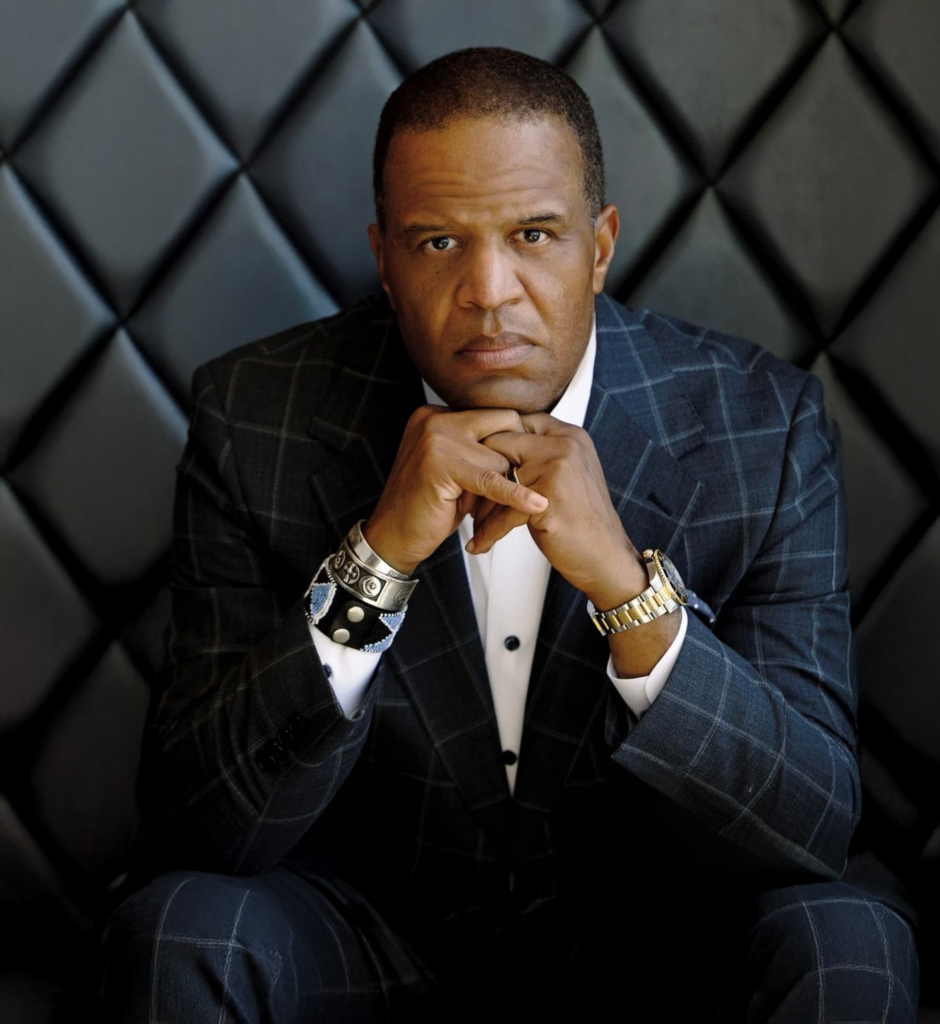
John Hope Bryant — founder of Bryant Group Ventures, Operation HOPE, Inc, publisher of the Bryant Journal and author of his 7th book Capitalism for All: Inclusive Economics and the Future Proofing of America, now a bestseller. Bryant was recently recognized as a member of the Forbes 250 Greatest Living Self Made Americans, on the occasion of the 250th anniversary of America itself. Get the book →