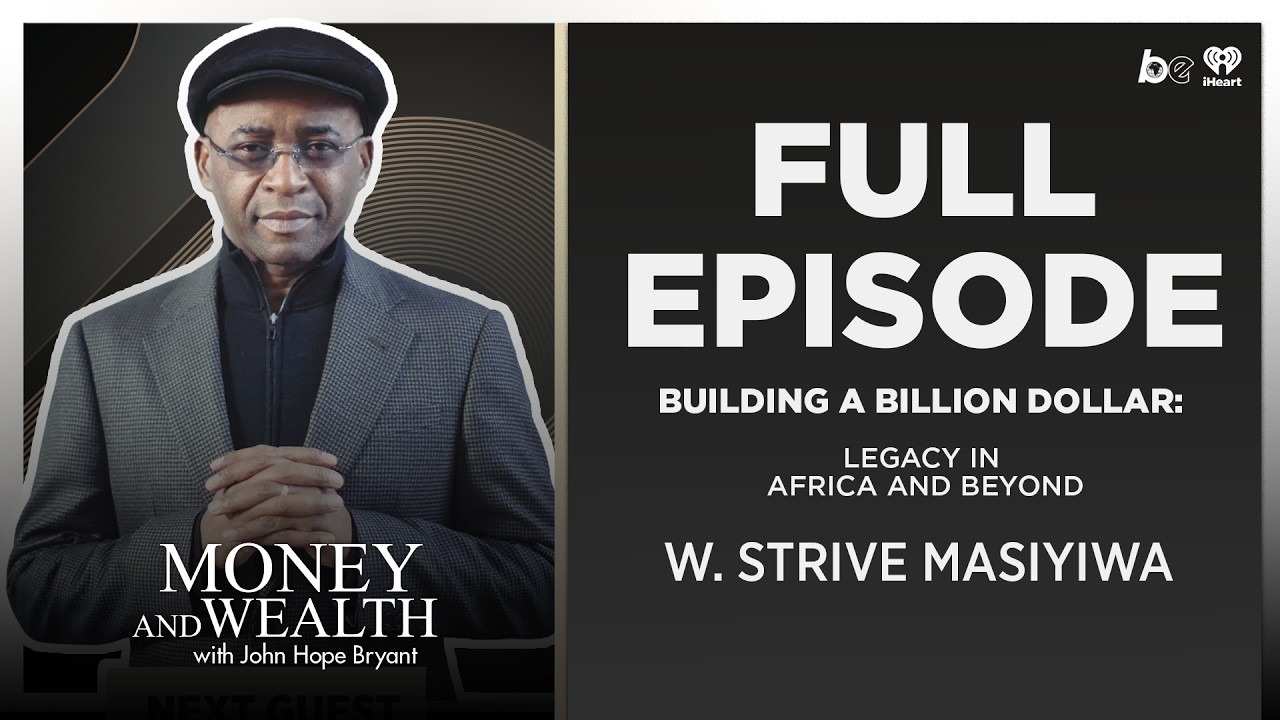
This one is a first on many levels. We are talking about the African century, and my guest is my brother Strive Masiyiwa. If you have ever wondered what it takes to build a billion dollar business in Africa and then carry it around the world, this conversation is a master class.
Strive was born in Zimbabwe and trained as an engineer. He is one of the most successful entrepreneurs ever to come out of Africa, the founder of the Econet Group, and a philanthropist who lives out his faith. I met him through my mentor, Ambassador Andrew Young, and our friendship has only grown since. He reads more than anyone I know, and he sends me a new book every week, faster than I can finish the last one.
Beating a government monopoly
When Strive set out to build a mobile phone company in Zimbabwe, the state controlled all of telecommunications. The president went on national television and called him a security threat, and he was picked up and interrogated. He took his case to the Supreme Court, and the court ruled that he had a constitutional right to build the business. His license came from a court, not from the state. The political attacks stayed intense, so about twenty-six years ago he moved to South Africa, where the capital was, and built from there. I know a little about being treated as a threat by people who assume a builder must want to be a politician. You ignore the noise and stay focused on building.
Nigeria and the $285 million license
In 2001 Nigeria had just come out of military rule and had almost no mobile phones. The president wanted a mobile business built, and the license had to be won in open competition. Strive assembled a consortium of about twenty wealthy Nigerian investors, because he wanted the business built with local capital. They paid $285 million for the right to operate, before a single customer was connected. His investors had one condition, which was that he live in Nigeria and run it himself. So he moved to Lagos and stayed until it worked.
Fiber, data and the AI factory
By the mid 2000s he saw that the internet was where everything was headed, and he began laying fiber. The president of Angola asked him to connect the country to its neighbors, which led to a route through the Congo rainforest that took three and a half years and tied the continent together from east to west. Later came data centers, mobile money and acquisitions around the world. His group now employs close to ten thousand people. He has just completed Africa’s first AI factory in Cape Town, and it was full the day it was switched on. He plans to invest three to four billion dollars over the next eighteen months, with centers going up in Egypt, Nigeria and Kenya. As he put it to me, Africa is not behind on this.
How he runs it
Strive keeps two equations in his head. The first is innovation plus marketing minus cost equals profit. The second is the three Ps: people, product and process. He chooses people for talent and values, and he told me you can be brilliant and still not fit. He spends hundreds of millions on technology and process so the business can scale, and he builds diverse teams on purpose, since some countries on his continent have seventy or eighty languages. Faith sits at the core. He pointed to the line often credited to Francis of Assisi, preach the gospel and use words if you must, which means the only way to share your values is to live them.
Higher Life Foundation
When Strive had about seven hundred employees, the HIV epidemic was taking his workers, and he was burying five or ten people every week. There was no cure, so he and his wife decided to pay school fees for the children left behind. His wife left her job at the United Nations to run the effort, and at its height they were supporting as many as forty thousand children at a time. Roughly half a million young people have gone through school with that help. The foundation does not raise money from third parties. Africans put their own money behind it. That same spirit took him into the Ebola response, where he worked with President Obama, and into the COVID response as special envoy for the African Union, reporting to fifteen heads of state.
For the young entrepreneur
His mother was a market woman who believed in saving, and Strive says you will not get far if you cannot deny yourself the instant purchase. He started his own business with seventy-five dollars. That matters more than ever with AI, because a young person willing to immerse themselves in these tools can start something now. Get on YouTube, be nosy, and treat AI as a co-creator. He calls everyone of African descent the African nation, whether your family left four hundred years ago or last year. His closing words were plain: this is our century now, so lift up your chin and let’s get going.
I want you to know who Strive Masiyiwa is, because he is a role model for the future. Read his writing, research his companies, and tag him online to ask him to come back for part two.
Watch the full conversation
Listen to the full episode of Money & Wealth with John Hope Bryant on iHeart, on the Black Effect Podcast Network.
— John Hope Bryant
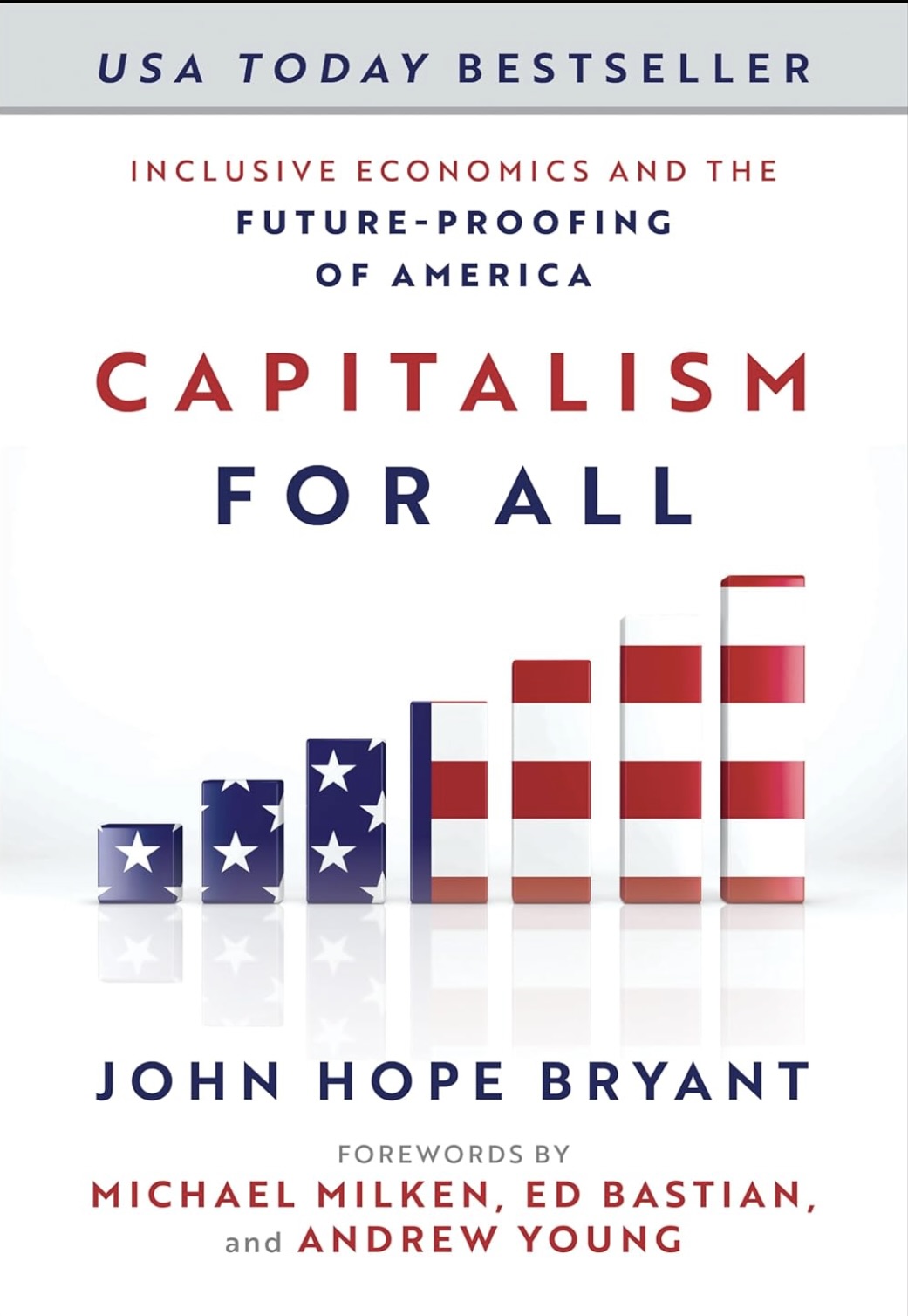
John Hope Bryant — founder of Bryant Group Ventures, Operation HOPE, Inc, publisher of the Bryant Journal and author of his 7th book Capitalism for All: Inclusive Economics and the Future Proofing of America, now a bestseller. Bryant was recently recognized as a member of the Forbes 250 Greatest Living Self Made Americans, on the occasion of the 250th anniversary of America itself. Get the book →